
Short answer: Most puppy growling and biting is rough play, and it often gets worse when she’s overtired. A loose, relaxed body usually means play.
A stiff or frozen body, bared teeth or guarding food is a warning. Back off, never punish the growl, and call your vet or a qualified behavior professional.
Growling and biting right now? Do this.
- Stop moving and stop the game. Biting should end play right away.
- Body stiff, or you’re holding her? Stay calm and quiet. Yelping can make a tantrum worse.
- No hitting, no scruff shaking. Physical punishment can even cause real aggression.
- Wild and loose instead? Hand her a tug toy, then offer a potty break and a quiet nap.
It’s 7 p.m. She’s been sweet all day. Now she’s hanging off your sleeve, growling like a much bigger dog.
You’ve typed “is my puppy aggressive” into your phone twice tonight. Your partner says show him who’s boss. You’re picturing the kids’ hands, and a word you don’t want to say out loud. Rehome.
Take a breath. Puppy growling and biting looks scary, and it is usually play. The ASPCA says most puppy mouthing is normal behavior. It’s fixable. You just need to know which kind of growl you’re hearing.
Play biting is rough social play with the mouth. Aggression is a bite or warning driven by fear, frustration, pain or guarding. Mistake a play growl for a threat, and you may punish it. A veterinary behaviorist writing for PetMD warns that physical punishment for growling may lead to snapping or even biting.
We sell a puppy schedule kit and a 3 to 6 month puppy plan. Both are linked below.
✓ Built on guidance from the ASPCA, VCA’s board-certified veterinary behaviorists, PetMD, the AKC and Loving Care Animal Hospital.
Is my puppy playing or being aggressive?
Watch her body language more than the noise. Play looks loose and bouncy. Trouble looks stiff, still and hard.
Even then, the two aren’t always easy to tell apart.
| What you see | Usually play | Take it seriously |
|---|---|---|
| Body | Loose and relaxed | Very stiff or frozen |
| Face | Muzzle may wrinkle, but little tension | Lips pulled back to show teeth |
| Eyes, ears and tail | Soft ears tipped slightly to the side, tail neutral | Direct eye contact with bared teeth |
| The bite | Mouthing that stops when you redirect her | Much more painful, breaks skin, or comes without warning |
| When it happens | During games | While held or handled, or near her food or toy |
Signs from the ASPCA, PetMD’s veterinary behaviorist and Loving Care Animal Hospital.
In a play bow, her front end drops and her rear stays up. The AKC calls it one of the most recognizable signals that a dog wants to play.
Why is my puppy growling during play?
Play growls are normal. PetMD says both puppies and adult dogs may growl during play. The noise can sound fierce while the body stays soft.
Still, set a line. VCA’s rule for tug is to stop the game the moment teeth touch skin or clothing. Restart only when she’s settled.
Is my puppy aggressive?
Probably not, if the table’s left column fits. VCA’s veterinary behaviorists also want you to drop the “boss” worry.
“Be assured your puppy is not trying to dominate or control you.”
Debra Horwitz, DVM, DACVB, and Gary Landsberg, DVM, DACVB, veterinary behaviorists writing for VCA Animal Hospitals
If her signs match the right column, treat it as possible puppy aggression. Some puppies bite out of fear or frustration, according to the ASPCA. That kind can signal problems with future aggression, so it needs a professional’s eyes.
Why do puppies growl and bite?
Play, frustration, being tired, being handled, guarding something, or feeling scared or sore.
- Play. Nipping and biting in young dogs is generally a form of social play.
- Frustration. The ASPCA calls these temper tantrums. They often start when you make her do something she doesn’t like, or when play boils over.
- Overtired or overexcited. Puppies often bite more when tired or overstimulated.
- Being corrected. PetMD says dogs growl when they’re yelled at, hit or sprayed with water.
- Guarding. A growl over a chew or bowl means she’s worried you’ll take it.
- Fear or pain. Loving Care lists fear as a cause. Medical problems can make a dog growl, too.
Why does my puppy turn into a growling shark every evening?
She may be overtired. The AKC’s trainers suggest a potty break when playtime ends, then a rest. Still attacking? They suggest a calm crate timeout with a small treat. In their words, the crate time is not punishment, it’s nap time.
Our puppy sleep schedule covers the bitey hour and overtired puppies. For everyday nipping, see how to stop puppy biting.
What should I do when my puppy growls and bites?
End the game when teeth touch skin, and hand her a toy instead. Stay calm while you do it.
How do I stop aggressive puppy biting?
Puppies need to learn to limit the force of their bite. That’s called bite inhibition. For rough play biting, the ASPCA’s steps take seconds each time.
- Yelp and go limp. Give a high-pitched yelp and let your hand go limp. Praise her when she stops.
- Cap it. Repeat the yelp no more than three times within 15 minutes.
- Short time-out. If yelping doesn’t work, ignore her or step away for 10 to 20 seconds. Then play again.
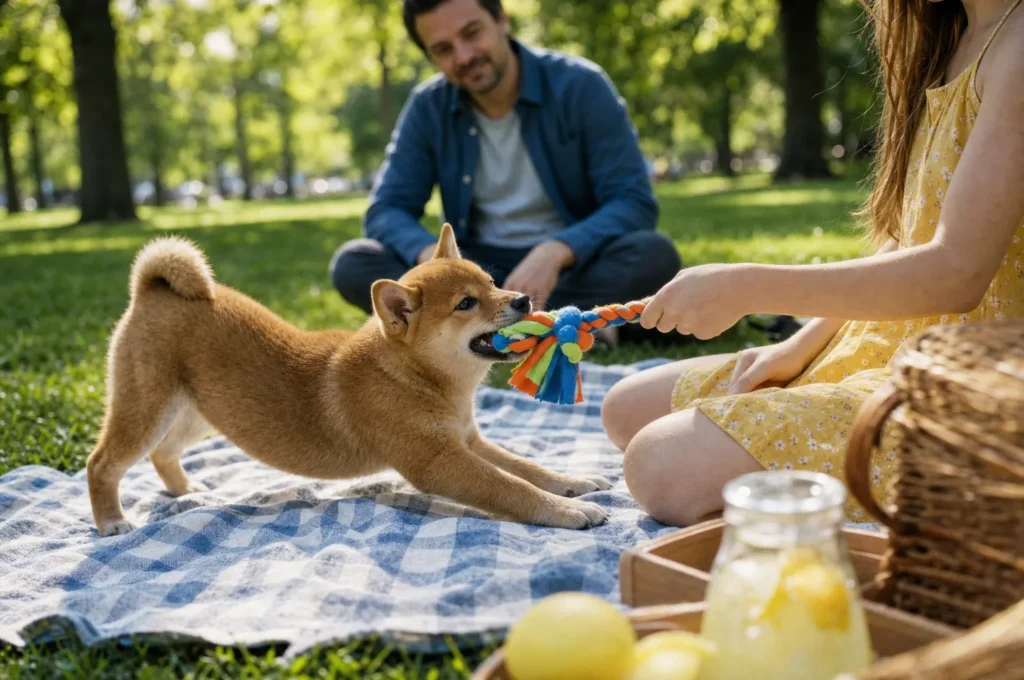
- Swap hands for a toy. Fetch and tug beat wrestling. Keep a tug toy in your pocket.
- Ankle biter? Freeze your feet, wave the tug toy, and move again once she grabs it.
Over time, tighten the rule. Any tooth on skin earns a 30 to 60 second time-out.
Everyone has to answer bites the same way. In VCA’s words, all family members must consistently follow the rules for the puppy to learn.
Why does my puppy growl when I pick him up?
Handling may hurt or frighten her. Stop unnecessary lifting and give her space. Do not squeeze or restrain her until she submits.
If you must move her for safety, avoid putting your face near hers. Ask your vet about painful handling.
How can I make handling more comfortable?
Start with brief, gentle touch while she stays relaxed. Pair it with a reward and stop before she worries.
Repeated growling, freezing or biting needs professional help. A qualified reward-based professional can teach handling without forcing hugs or lifts.
Is it food aggression if my puppy growls over a chew or bowl?
That’s resource guarding, sometimes called food aggression. PetMD says a guarding dog growls with direct eye contact, bares her teeth and hunches over the item.
- A growl often means she needs space. So back off and leave the item alone.
- Save the best chews for her crate or a pen. Then nobody has to reach past her.
- If the guarding keeps happening, book a vet exam first, then a behavior professional.
My dog keeps biting me aggressively. What now?
Hard bites that keep coming are a health question first, even from a young puppy.
- Bite broke the skin? Call your doctor about the wound, too.
- See the vet. PetMD advises an exam if growling escalates to lunging and biting.
- Notice sudden changes. Pain and medical problems contribute heavily to sudden behavior changes.
- Then a behaviorist. After a clean bill of health, find a board-certified behavior professional.
Tip: Write each growl down, with the time and what was happening. Note whether her body was loose or stiff. Bring the list to your vet or behaviorist.
Should I punish my puppy for growling?
No. The ASPCA, VCA and PetMD all warn against physical punishment. A growl is a warning you want to keep.
PetMD’s Wailani Sung, a board-certified veterinary behaviorist, says never punish your dog for growling. Physical punishment for a growl may lead to bared teeth, lunging, snapping or biting.
VCA adds that pain can cause aggression, and that physical methods are not recommended. Some puppies even read punishment as rough play, and bite more. So “show him who’s boss” tends to make the thing you’re scared of more likely.
For your household: Agree on one calm response and share concerns with your vet or qualified trainer. Consistency helps everyone notice changes sooner.
Whatever set off your puppy’s growl, keep everyone safe first. Then work out why it happened.
Will my puppy bite my kids?
Kids are at higher risk, and it isn’t their fault. VCA says children appear to be most vulnerable. Their reactions often look like an invitation to more chasing and play.
Use active adult supervision whenever children and the puppy share a space. Separate them with a secure barrier when supervision stops. Children should not approach a puppy who is eating, sleeping or chewing.
Yelp, walk away, or crate? Where the experts split
No source here says to punish her. Their steps differ for the second the teeth land.
| Source | What they tell you to do |
|---|---|
| Loving Care Animal Hospital | Say “ouch” in a calm voice, stop playing, turn away briefly, resume once she’s calm |
| ASPCA | High-pitched yelp, limp hand, then 10 to 20 second time-outs. Never yelp during a tantrum |
| VCA behaviorists | End play at once and walk away. If she chases, close a door and leave the room |
| AKC trainers | Stop moving and ask for a behavior to reward. If that fails, a calm crate timeout with a small treat |
Use one decision rule. Loose and bouncy? Use the yelp or walk-away from the table. Stiff, frozen, or in your arms? No yelping, stay calm, and call a professional. Wild at dusk? Potty break, then a nap.
When should you call a vet or a behavior professional?
Call when these red flags show up, keep repeating, or appear out of nowhere.
- A stiff or frozen body, lips pulled back, and bites much harder than play
- Repeated tantrums when you hold or handle her
- Guarding food or toys with bared teeth and direct eye contact
- Growling that won’t stop, refusing treats, or looking fearful and anxious
- A sudden change in a puppy who was easygoing, which can point to pain
- Biting that keeps increasing, or training that isn’t working
Red flags from the ASPCA, PetMD and Loving Care Animal Hospital.
Start with your vet to rule out pain. Then the ASPCA suggests a Certified Applied Animal Behaviorist or a veterinary behaviorist (Dip ACVB). No behaviorist nearby? A Certified Professional Dog Trainer with fear and aggression experience can help. Skip any trainer who uses punishment.
What to do this week
- Watch three growls closely and sort each one with the play table above.
- Agree as a house on one response to a hard bite, and one word.
- Keep a tug toy in your pocket, and stop using hands as toys.
- Set up play with other puppies or friendly, vaccinated adult dogs. That kind of socializing leaves her less keen to play rough with you.
- Protect her naps, and offer one before the evening rush.
- If any sign from the list above shows up, call your vet this week.
Not sure where this week is slipping? Our free Puppy Week Check-In asks six quick questions once she’s home. You get one practical next step, and no email is needed.
Puppy growling and biting FAQ
Should I growl back if my puppy growls at me?
No. Dr. Sung lists being reprimanded among the reasons dogs growl. She adds that punishment increases a dog’s fear and anxiety. Step back, end the moment, and redirect her.
Is it normal for a 12-week-old puppy to growl and bite?
Usually, yes, during play. The AKC’s trainers called growling, clothes grabbing and leg biting in an 11-week-old normal. The stiff signs in our table are the exception.
Can teething make a puppy bite more aggressively?
Teething can increase chewing and mouthing. It does not explain every hard bite or guarding episode. Treat stiffness, fear and painful handling as separate concerns.
Do puppies grow out of aggression?
Loving Care says most puppies outgrow biting when guided properly. Frustration biting is different. The ASPCA wants a professional to assess repeated bouts as soon as possible.
Should I rehome my puppy if he bites?
Don’t decide tonight. The ASPCA says a trained professional can tell you whether the biting is normal. They can also guide you through a treatment plan.
Last updated: October 24, 2026. We checked current search results and reviewed the guidance linked in this article. This is general education, not an individual veterinary assessment.
Sources
- ASPCA: Mouthing, Nipping and Biting in Puppies
- VCA Animal Hospitals: Play Biting in Puppies, by Debra Horwitz, DVM, DACVB, and Gary Landsberg, DVM, DACVB, DECAWBM, and Puppy Handling Exercises
- PetMD: What Dog Growling Means and What To Do, by Wailani Sung, MS, PhD, DVM, DACVB
- American Kennel Club (AKC): Aggressive Puppy Biting, Ask Our Trainers, plus play signals and handling exercises
- Loving Care Animal Hospital: Is Your Puppy Biting Too Aggressively? What to Do Next