

QUICK ANSWER
If your puppy barks at a mirror or window reflection, block the view. Help them move to a comfortable activity. Notice whether the behavior changes with lighting, location, or distance. Practice around a mild version only when the puppy is comfortable. Persistent distress or a sudden wider change needs professional advice.
On this page
The garden is empty. Your puppy is staring at the glass, and every movement seems to restart the barking.
Look from your puppy’s level before concluding that nothing is there. A reflected shape can become conspicuous when the room is bright and outside is dark.
Check whether the reflection is involved
Notice the surface your puppy faces. It might be a patio door, full-length mirror, glossy appliance, or dark television screen.
Without provoking another episode, cover the view safely or lead the puppy away. Observe whether they can return to a comfortable activity.
Then consider when it happens. A day-versus-evening difference may help you identify the glass and lighting as part of the setup.
You do not need to decide what the puppy “believes” about the image. You need a practical way to reduce a repeated reaction.
Dial A Vet’s reflection discussion describes reactions around mirrors. For broader distress signs, PetMD’s veterinarian-authored anxiety guide explains body language and recovery. Use the reflection observations here to describe what happens, rather than diagnose your puppy.
Change the view before asking for quiet
Close a suitable curtain or move a resting place away from the reflective surface. Secure anything the puppy could pull down.
Keep the route through the room safe. Avoid unstable coverings, trailing cords, or loose items within chewing reach.
If you change lighting, check the result from the puppy’s position. A different lamp may create a new reflection rather than remove the old one.
For a mirror, preventing access can be easier than repeatedly interrupting barking. You can work on a comfortable response later.
| Where it happens | First adjustment to consider | What to watch afterward |
|---|---|---|
| Patio door after dark | Close the curtain before the usual time. | Can the puppy rest elsewhere? |
| Hallway mirror | Change access or the route past it. | Does ordinary movement become easier? |
| Glossy appliance | Move the puppy’s resting spot. | Is the same reaction present away from that surface? |
| Several unrelated places | Record the wider pattern. | Is there a sudden change worth discussing with your vet? |
Our guide to barking at apparently nothing covers other possible triggers.
If passing activity through a vehicle window starts the barking, use the car-barking guide. Movement and travel comfort need separate checks.
If covering the glass changes nothing
Check whether your puppy is watching movement beyond the glass or responding to a sound elsewhere. Move to a comfortable space and notice whether the reaction stops there.
If barking continues away from the surface, widen your observations. Record the time, sound, nearby activity, and how easily your puppy recovers. Avoid repeated mirror tests when the puppy is already upset.
Practice only at a manageable level
Choose a position where your puppy can notice the area without becoming upset. Reward a comfortable turn toward you or another familiar response.
Keep the exposure brief. End while the puppy can still move away and engage normally.
If staring intensifies or barking starts, increase distance or block the view again. Do not hold the puppy beside the mirror to force acceptance.
The American Veterinary Society of Animal Behavior supports reward-based training. Repeated exposure is not useful practice when the animal is overwhelmed.
If you cannot find an easy starting point, ask a qualified reward-based professional for help. There is no need to keep repeating the hardest version.
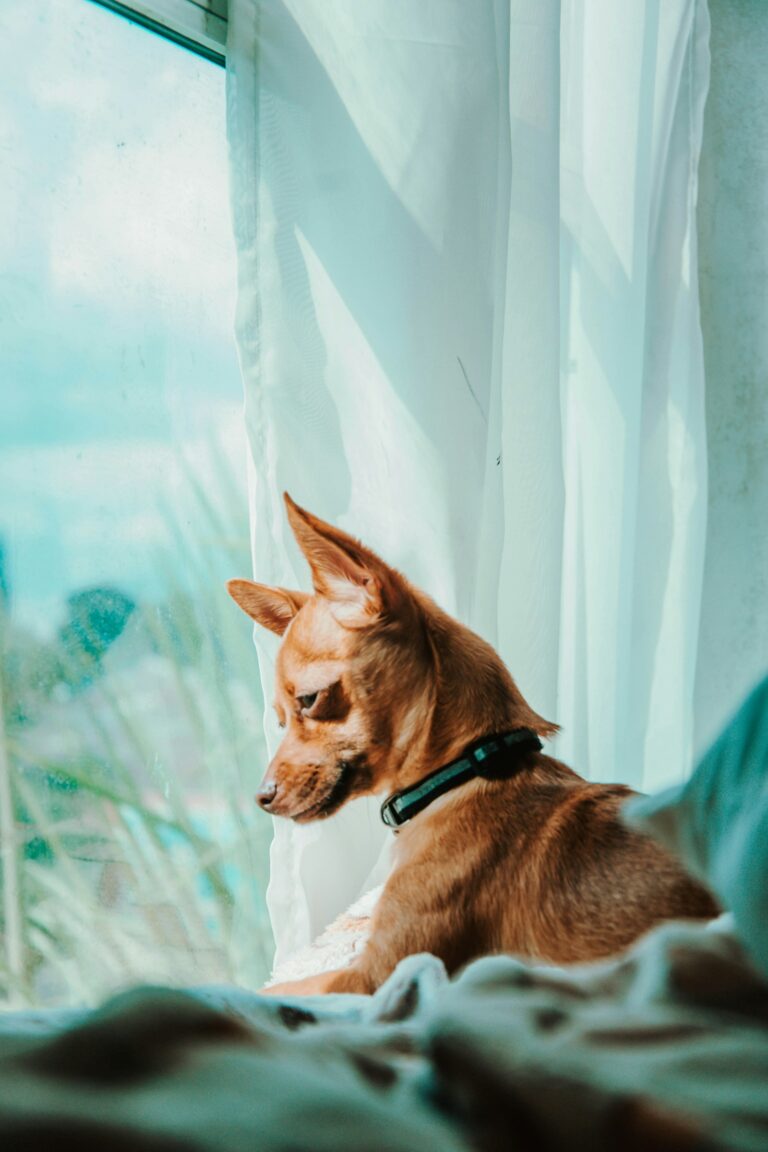
Notice more than the noise
A brief bark followed by easy recovery differs from prolonged staring, lunging, or repeated distress. Watch whether the puppy can leave the area.
Also note changes outside the reflection situation. Appetite, normal movement, rest, or comfort may give your veterinarian useful context.
Do not diagnose a vision or behavior condition from a reflection response alone. Seek veterinary advice for sudden or concerning changes.
If nighttime barking has several triggers, use the night-barking guide. If the pattern starts near sunrise, see early-morning puppy barking.
Keep a short record that helps the next decision
Write down the surface, lighting, approximate distance, and what happened when the view was blocked. Add whether recovery was easy.
Those details give you a concrete setup to change or describe when asking for help.
LoveMyPuppy’s free Puppy Barking First Check gives you a short place to start. Use it alongside your notes about the surface and lighting.
Will my puppy grow out of mirror barking?
Some puppies become less interested with familiarity. Do not rely on age alone if the reaction is intense or keeps recurring.
Should I show the mirror more often so it becomes normal?
Only practice at a level your puppy can handle comfortably. Repeatedly triggering barking can make the room harder to use.
Is laughing or filming a problem?
Focus on helping the puppy settle. Avoid extending an episode to capture a reaction. A brief existing recording may help a professional understand it.
For other situations, the puppy barking training hub helps you choose a relevant next guide.