

You are tired, the house is dark, and your dog is barking again. It is tempting to make the quickest noise-stopping change. A brief note about when it happens can prevent a lot of guessing.
FIRST, A PRACTICAL CHECK
At the next waking
- Check immediate needsMake sure your dog is safe and consider toileting, discomfort, or a new sound.
- Note the patternWrite down the time, location, and what happened just before the bark.
- Escalate new changesCall your veterinarian about sudden or unusual behavior, especially with other symptoms.
What can set off barking at night?
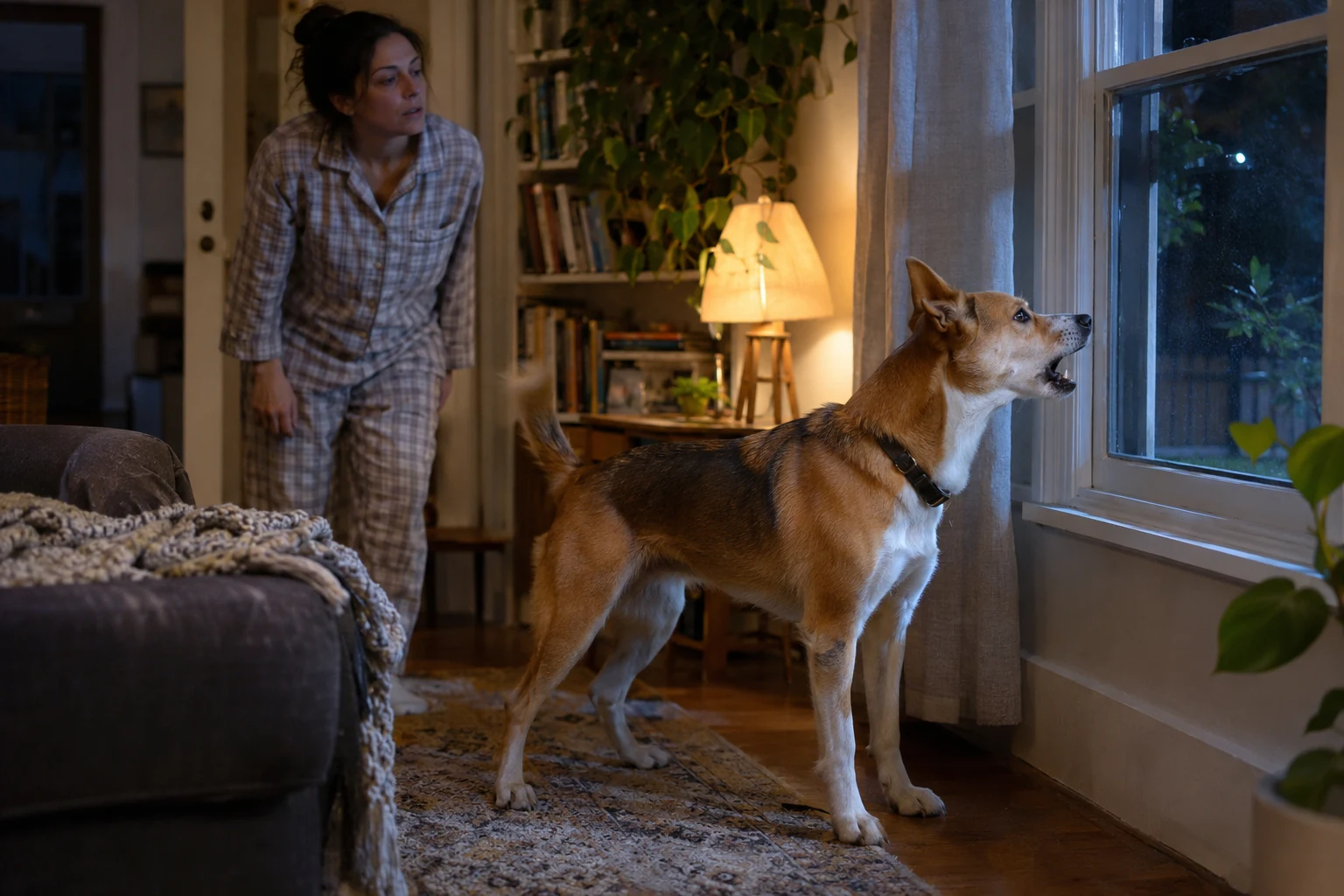
With fewer daytime sounds around, a delivery truck, neighbor, wildlife, or movement outside may stand out. A young dog may need a bathroom trip. A dog who is alone may be unsettled. For an older dog, changes in comfort, vision, hearing, or health may matter, especially if the barking is new. Dogs Trust’s barking guide also includes nighttime triggers among the patterns to consider.
Is your dog asleep or awake when it happens?
A dog who briefly vocalizes while staying asleep is different from a dog who wakes, gets up, and barks toward a window or doorway. PetMD’s veterinary review explains that barking during sleep can be part of dreaming. If the behavior is new, prolonged, intense, or comes with unusual behavior when your dog is awake, call your veterinarian rather than assuming it is an ordinary dream.
A young puppy who wakes and needs a bathroom trip has a different immediate need from an adult dog who has slept comfortably for months and suddenly starts waking to bark. Do not use a rigid age chart to decide whether to ignore it. Compare what happened with your own dog’s usual routine, comfort, and behavior.
What should I check tonight?
- Note the time and where your dog is when the barking begins.
- Look for an obvious sound or movement outside without putting yourself or your dog at risk.
- Consider whether your dog may need a quiet bathroom trip.
- Check whether the sleep location, household routine, or time alone recently changed.
- Notice other changes, such as restlessness, confusion, pain, or interrupted sleep.
If your dog is barking from a crate and showing distress, do not assume that leaving them to bark is the right response. See our focused guide to a puppy crying in the crate at night. If your dog is panicking in confinement, read dog anxiety in the crate.
If the barking begins around the same time each night, check what else happens then: a neighbor coming home, outdoor activity, a change in the room, or a longer interval since the last bathroom trip. A pattern is a clue, not a diagnosis. Keep tonight’s response quiet and practical, then investigate in daylight when you are rested.
If noise is affecting neighbors, moving your dog to a quieter sleeping place away from a busy window may reduce what they notice. That does not replace checking toileting, discomfort, or distress. You are allowed to manage the noise while still taking the cause seriously.
For an older dog, new pacing, apparent disorientation, changed sleep, or trouble getting comfortable deserves particular attention. If it is safe, a short video and a few notes on when the change began may help your veterinarian. Ask the clinic how promptly they want to assess it rather than waiting through another week of broken sleep.
When is nighttime barking a veterinary question?
Call your veterinarian when nighttime barking begins suddenly, becomes more frequent, or comes with a change in movement, appetite, toileting, sleep, or awareness. Do not rely on a checklist to diagnose the cause. A vet can help decide whether a health assessment is needed.
Will white noise or a bedtime routine fix it?
A quieter sleep location or a predictable routine may help when sounds or changes in the evening are part of the picture. These are management ideas, not guaranteed cures. If the barking continues or your dog seems distressed, ask your veterinarian or a qualified behavior professional for advice.
Frequently asked questions
Why would a dog start barking at night all of a sudden?
A changed sound, schedule, toileting need, discomfort, or another cause may be involved. A new pattern cannot be diagnosed from the bark alone. Contact your veterinarian when it is abrupt, persistent, or comes with other changes.
Can white noise stop nighttime barking?
It may soften some background sounds, but it cannot identify why your dog is barking. Do not use it to cover signs of distress or a sudden change.
Should I let my dog outside when they bark at night?
Keep the trip calm and safe if you need to check toileting. Use a leash or secure area, supervise, and avoid sending your dog to investigate an unknown sound.
Sources and further reading
General information only. This is not a diagnosis or substitute for veterinary or qualified behavior support.