

It happens when you are finally sitting down: your dog fixes on a corner, a window, or the quiet hallway and starts barking. You check the room and see nothing. That does not mean your dog is imagining things or trying to annoy you.
FIRST, A PRACTICAL CHECK
Look for the details around the bark
- Where was your dog?Note the room, window, doorway, or outdoor spot.
- What happened just before?Record sounds, movement, a person passing, or a routine change. Leave the cause blank if unknown.
- What changed afterward?Notice whether your dog settled, stayed alert, or seemed confused or uncomfortable.
Can dogs notice things people miss?
Yes. Dogs experience sounds, smells, and low-light movement differently from people. A faint noise from a neighbor, wildlife outside, a reflection, or a familiar household sound can be easy to miss. Cornell’s overview of excessive barking notes that triggers may be outside an owner’s immediate view; the AKC’s article also discusses why a dog may react when a person sees no obvious cause.
What should I look for?
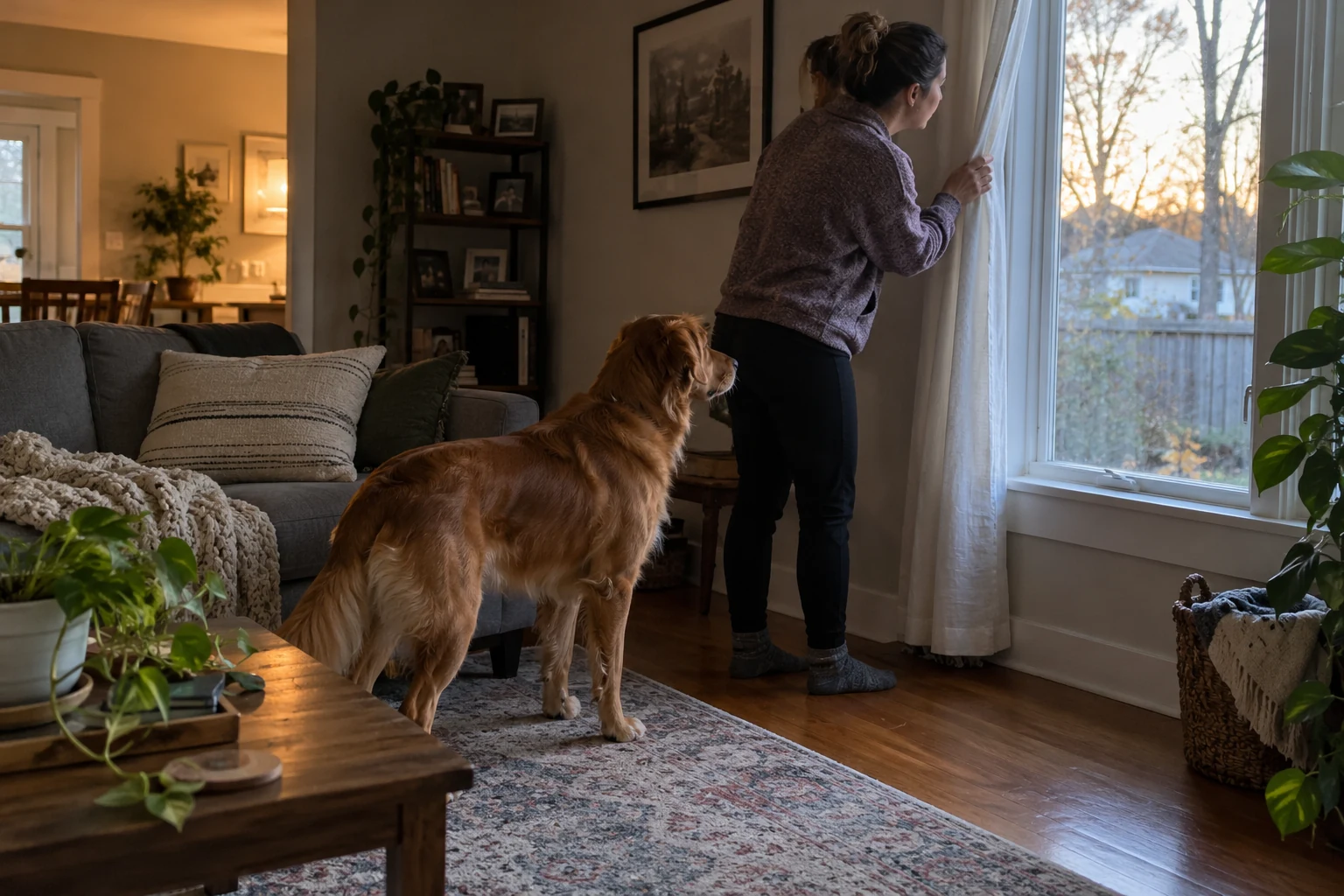
Notice where your dog is looking, when the barking happens, and what is nearby. Does it occur around the same time, near a window, after an appliance starts, or when people pass outside? Check the environment safely. Do not encourage your dog to chase, confront, or investigate something that could put either of you at risk.
When it is safe and does not interrupt your dog, a short video of one episode may preserve body language you could forget later. Include what your dog was facing, whether they moved toward or away from the spot, and whether they settled when the setting changed. A recording may help your veterinarian, but it will not prove what your dog sensed.
If the barking happens by the same window each evening, consider a predictable event outside your view before concluding there is “nothing.” A person passing beyond the fence, wildlife, a hallway sound, or a television in another room can be part of the setting. Check without opening a door or putting yourself at risk. If you find no clue, it is honest to leave the cause unknown.
What if I still cannot find the trigger?
Leave “cause” blank if you do not know. Notice whether the next episode happens near the same window, at the same hour, or after the same sound. If the barking happens mainly after dark, see our guide to barking at night for a focused first check.
What can you do before you know why?
You can respond kindly without naming the trigger. Stay calm, give your dog a chance to move away from the window or doorway, and avoid pulling them back to inspect it again. If they settle in a quieter spot, note that too. It tells you which setting was easier, not necessarily what started the barking.
It is tempting to keep searching the room, especially when the noise is bothering neighbors. Start with safety and observation rather than a promise to stop every bark tonight. Closing the view or choosing a quieter room may help in some homes. If the pattern continues, humane professional guidance is more useful than buying a device before you understand the situation.
The point of notes is not to diagnose your dog at home. They give your veterinarian a clearer picture: when the behavior began, whether it is becoming more frequent, and what else changed. If you captured a brief clip safely, ask the clinic whether it would help at the appointment.
When should I call the veterinarian?
Contact your vet if the behavior is new, getting worse, or paired with confusion, changes in sleep, pain, reduced appetite, or unusual movements. In older dogs, new nighttime pacing or vocalizing deserves a conversation with a veterinarian. Do not assume it is simply a behavior problem.
Should I yell or use a bark collar?
Do not use fear or pain to silence a bark. It can increase distress and does not identify the cause. AVSAB recommends reward-based training methods for behavior concerns. If the barking is difficult to manage, your veterinarian can help you find qualified, humane behavior support.
Frequently asked questions
Can dogs hear or see something I cannot?
They can notice sounds and movement that people miss. That is one possibility, but the bark alone cannot identify the trigger.
When should I call the vet about barking at nothing?
Call if the behavior is new, worsening, or paired with confusion, disrupted sleep, pain, appetite changes, unusual movements, or other concerning signs.
Should I punish my dog for barking at nothing?
Avoid fear or pain as a way to silence the bark. First check the surroundings and your dog’s comfort. If the pattern continues, ask your veterinarian or a qualified behavior professional for help.
Sources and further reading
General information only. This is not a diagnosis or substitute for veterinary or qualified behavior support.