

Short answer: Check puppy whining for pain, fear, hunger and toilet needs before treating it as a training issue.
Respond to distress. For a comfortable puppy seeking interaction, reward calm moments and make alone-time practice easier.
She’s whining right now? Run this check.
- Did she just wake up, eat, drink or play? Take her out now. Whining, scratching and restlessness can mean she needs to go, according to the AKC.
- Vomiting, diarrhea, or eye or nose discharge? Call your vet. Those can be signs of illness, PetMD notes.
- Looking at you does not prove attention seeking. Check her body language and respond to fear or discomfort.
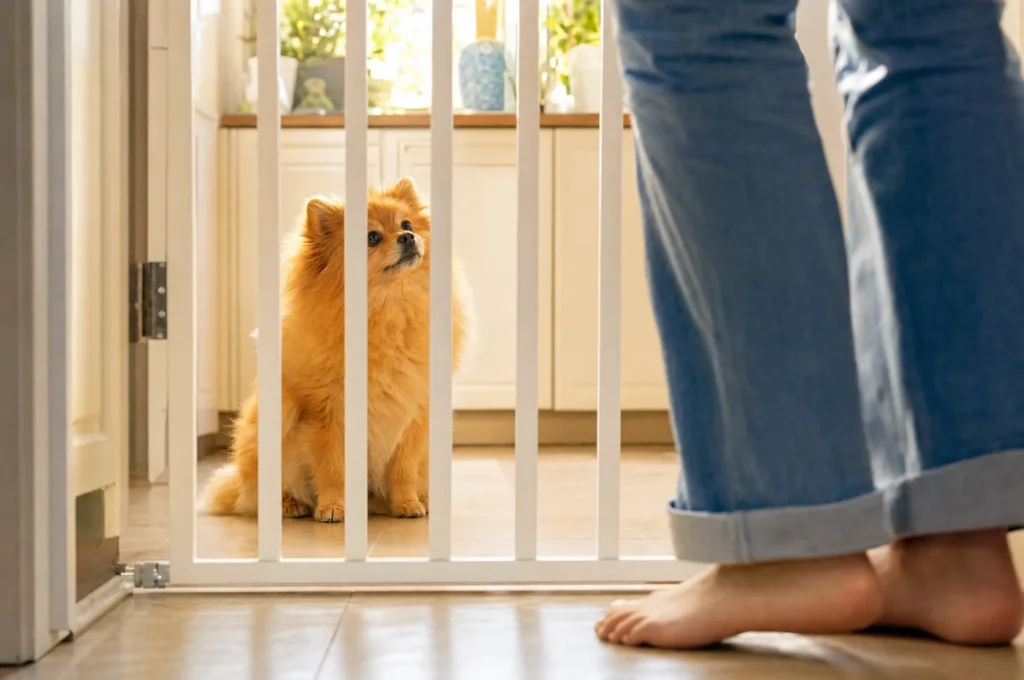
She whines when you walk to the bathroom. She whines at the gate while you cook. You sit down for one email, and the noise starts again, higher this time.
Your partner goes to her every time. You’ve been trying to wait it out. Now you’re both tired, and you’re starting to wonder if something’s wrong with her.
Puppy whining is a high, soft cry a puppy uses to ask for help, food, attention or comfort. Dogs most often whine for attention, from excitement or anxiety, or to appease you, the ASPCA explains.
Each time the whine opens the gate, she learns it works. A Tufts behaviorist calls dogs’ attention-seeking habits “always maintained by learning,” and learned habits can change. A whiny new puppy is normal. Start by working out which whine you’re hearing.
We sell a printable puppy schedule kit and link to it below. Our potty timer is free.
✓ Built on guidance from the ASPCA, the AKC, PetMD, Tufts’ Cummings School and the Royal Veterinary College.
Why is my puppy whining?
She has a need, a feeling or a habit. The moment it starts tells you which.
Puppies first cry so their mother can find them, PetMD explains. In a new home, away from her litter, she may whine because she feels scared and alone.
Whining can signal a need, excitement, fear or pain. Appeasement after scolding is not proof she understands wrongdoing.
| When it happens | What she likely needs | What to do |
|---|---|---|
| Right after a nap, a meal, a drink or play | Potty | Take her out now |
| Near mealtime, or a toy rolled under the couch | Food or help | Wait for quiet, then help |
| After a long, busy stretch awake | Sleep | Guide her to bed to wind down |
| A long, quiet stretch with nothing to do | Play or something to occupy her | Play first, then hand her a chew |
| You are busy and she looks toward you | Interaction, help or reassurance | Check her needs and body language before choosing a response |
| A new guest, a barking dog, or pacing and trembling | Comfort from fear | Comfort her, ease the trigger |
| When she climbs stairs or jumps, or for no clear reason | Pain or illness check | Call your vet |
| The moment you walk away or out of sight | Reassurance you come back | Calm exits, short time apart |
Puppies usually sleep 18 to 20 hours a day, the AKC notes, and exhaustion can lead to “unfortunate behavior.”
Whining for more food right after a meal? Don’t give in. Extra food only makes the whining worse, the AKC warns.
Boredom can do it too. The AKC compares it to kids bored by grown-up talk at dinner. It suggests enough exercise and mental stimulation each day.
How do you respond to attention-seeking whining?
First rule out unmet needs, fear and discomfort. Looking at you does not establish the cause.
If she is comfortable, notice and reward quiet moments before whining starts. Offer predictable opportunities for company and gentle play.
If the whining escalates, reassess rather than waiting her out. Panting, pacing, drooling or frantic escape attempts need a different response.
The ASPCA’s whining guidance distinguishes attention seeking from anxiety. A vet or qualified behavior professional can help when the cause is unclear.
Why does my puppy cry when I leave the room?
She’s bonded to you and hasn’t learned yet that you come back. Puppies may cry when family members go out of sight, even to the bathroom, PetMD notes. They may also protest a pen that keeps them from the family.
A small 2026 Royal Veterinary College study followed 34 new puppy owners. Puppies whose owners were advised to leave and return calmly spent more time resting quietly alone. It found no evidence of significant effects on specific signs of distress overall, so treat it as early evidence.
How to teach her you come back
- Exercise first. Play or walk before you step away.
- Leave a long-lasting treat. A chew or stuffed toy works.
- Keep exits and returns calm. No big goodbye, no big hello.
- Build distance slowly. Step out for seconds, and come back before she’s upset.
Watch for signs it’s more than normal. If she only whines as you leave or while you’re gone, the ASPCA says she may have separation anxiety. You’ll usually see another sign too, like pacing, panting, drooling, damage near doors, or accidents. Our protest or separation anxiety guide helps you tell them apart. Picking her alone-time space? See puppy playpen vs crate.
Why is my puppy whining at night when she isn’t in a crate?
Start with her bladder. Then think about how lonely the first nights feel.
A whine in the night can also mean she needs to go. Puppies can usually hold it for about one hour per month of age, says the AKC’s potty training guide. Its outer limit is age in months plus one.
Near that window, take her out, keep it quiet and dull, and bring her straight back. If she went recently, offer calm comfort instead. She’s used to sleeping beside her mother and littermates, PetMD explains, so sleeping alone can feel scary.
Puppy whining in the crate or on the first night
Crying or whining is common during crate training, PetMD notes. At night, it suggests the crate or pen within arm’s reach, so she can see you in bed.
Your hand through the bars can sometimes comfort her with its smell and warmth. You may only need that for the first few nights. Our crate training guide covers crying in the crate and the first night step by step.
Can’t remember when she last went? Our free Potty Break Timer gives her next trip time and a countdown from her age and last trip.
Is my puppy whining in pain?
It can be, so look at what comes with the whine. Puppies cry when hurt, PetMD notes. Think of a stepped-on paw, a first vaccine, or nails cut too short. A sick puppy may also vomit, have diarrhea, or have eye or nose discharge.
- Whining when she moves. Whining on every stair or jump may mean joint pain, per the AKC.
- Drooling or tiny spots of blood on her toys. From about 3 to 4 months, that can be teething. The AKC calls it “awfully painful,” with sore gums. Offer a safe chew, and tell your vet if anything seems unusual.
- Sudden new whining. See the vet to rule out medical causes, the ASPCA advises.
- Asking out again right after a trip. The AKC links that to a possible bladder or digestive problem. See your vet.
Puppy whining for no reason
Run the table once more, toy under the couch included. If her needs are met and nothing scares her, the AKC advises a vet visit. A checkup can rule out a medical cause she can’t tell you about.
Tip: Before the visit, note when the whining happens and what came just before. Add a short phone video for your vet.
Should I ignore puppy whining?
“Do not ignore your puppy’s whines or cries,” writes Dr. Wailani Sung, MS, PhD, DVM, DACVB, for PetMD. To her, these are usually cries for help or comfort. She puts that comfort first “in the first few days you bring them home,” with training for specific habits later.
Reward calm behavior when she is comfortable. Advice about attention seeking should never become a reason to ignore fear or pain.
So name the whine first. If she’s scared, hurting, sick or needs to go, respond right away. If her needs are met and she’s only asking for you, wait for quiet. If ignoring turns into panic, with pacing, panting or drooling, stop waiting and get help. That points to anxiety, and the ASPCA says anxious whining is hard to stop while the cause remains.
Whichever whine it is, Borns-Weil’s advice is for every family member to apply the rules consistently.
When should you call a vet or a trainer?
- Pain, illness, or whining with no clear cause. Call your vet first.
- Panic when she’s left alone. The RVC suggests your vet or an accredited animal behaviorist.
- Attention or greeting whining you can’t shift. The ASPCA suggests a Certified Professional Dog Trainer. For anxious whining, it names a veterinary behaviorist.
What should you do this week?
- Today: jot down when she whines and what came just before. Match each to the table.
- Tonight: agree as a house on one answer to attention whining. Everyone waits for quiet.
- Tomorrow: put a few chews by her gate. Swap one in as you walk away.
- All week: practice calm, short exits from the room. Come back before she gets upset.
Puppy whining FAQ
Why does my puppy whine when people come over?
Greeting whines usually come from excitement, the ASPCA says. Keep greetings short and calm, and pet her once she settles. You can also teach her to touch your palm with her nose instead.
Should I leave the TV or radio on for my puppy?
Maybe not. In the Royal Veterinary College study, puppies left with a TV or radio on showed more passive signs of anxiety. They also ate and played less. It was a small study, so treat it as a hint.
Why does my puppy whine when I scold her?
She may be frightened or trying to reduce conflict. This does not prove guilt. Stop scolding and use calm, reward-based guidance.
Why does my puppy whine when I put her down?
She may need reassurance, or handling may hurt. Notice when it happens rather than assuming attention seeking. Ask your vet about sudden crying, limping or discomfort.
When do puppies grow out of whining?
None of the vet sources we read gives a set age. They tie it to the cause instead. Need-based whining eases as her needs are met and her routine settles. Attention whining fades once it stops paying off, often after a louder patch first.
Last updated: October 24, 2026. We checked current search results and reviewed the guidance linked in this article. This is general education, not an individual veterinary assessment.
Sources
- ASPCA: Whining
- American Kennel Club (AKC): Reasons your dog is whining
- PetMD: Why Is My Puppy Crying and Whining and How Can I Help Them?
- Cummings School of Veterinary Medicine at Tufts: How to Stop Attention-Seeking Behavior
- Royal Veterinary College: New study offers clues for how to ease puppy separation stress