

Short answer: Young puppies pee a lot because their bladders are small. Very young ones may need a trip every one to two hours while awake.
Tiny squats every few minutes, straining, blood, or big puddles plus heavy drinking are different. See your vet, who can check a urine sample.
Urgent: Repeated straining with little or no urine needs immediate veterinary attention. A urinary blockage can be an emergency.
She peed outside two minutes ago. Now she’s squatting on the rug again, and you can’t tell if this is normal puppy stuff.
“Peeing so much” can mean a dog peeing frequently, in small amounts. Or it can mean big, watery puddles while she drinks more. Each points somewhere different.
Frequent small pees can signal a urinary problem. Cornell lists indoor accidents among UTI signs.
Call your vet about a new pattern. Do not delay care while gathering a full day of notes.
We sell the First 14 Days Kit and washer-cleaner tablets, linked below. Our existing potty timer is free.
✓ Built on guidance from the AKC, PetMD, VCA, Cornell’s Riney Center and Humane World for Animals.
Why is my puppy peeing so much?
Puppies have small bladders (AKC). PetMD adds that they’re still building bladder control and need more water. Exercise and heat make her drink more, and more water means more pees.
| What you see | Most likely | What to do |
|---|---|---|
| She pees after waking, eating, drinking or play | Normal puppy timing | Take her out at those moments |
| Pees only when greeted, maybe crouching or rolling over | Excitement or submissive peeing | Calm, low greetings, no scolding |
| Small pees in several spots, often on upright things | Marking, usually from 6 to 9 months on | Enzyme clean every spot |
| Small squats every few minutes, straining, or blood | Possible UTI or bladder stones | Call your vet |
| Big, watery puddles and a bowl that empties fast | Increased thirst and urination | Measure her water, call your vet |
Peeing right after coming inside? See why she pees right after coming in.
How often should a puppy pee?
Very young puppies need a trip after waking, eating, drinking, playing and before bed, per the AKC. Depending on age, that may mean every one to two hours while she’s awake. Our puppy potty training schedule lays out those trips by age. In an apartment, stairs or an elevator add minutes to every trip, so head out a little early.
Holding time and toilet frequency are different. Age-based formulas cannot establish an individual puppy’s safe waiting time.
Age-based holding estimates are rough guides, not safe waiting limits. Awake puppies may need much more frequent trips.
Respond to her signals and changes in her usual pattern. Never make her wait to meet a chart.
How often does an 8, 10 or 12 week old puppy pee?
Young puppies need frequent chances to go, particularly after waking, meals, drinking and play. Some need trips closer together.
Repeated tiny squats, discomfort or a sudden change need veterinary advice. Do not wait for an age milestone.
Why is my 3, 4 or 5 month old puppy peeing so much?
Bladder control develops gradually. Growing older does not rule out an infection or another medical problem.
Compare today with her usual pattern. Tell your vet about increased thirst, larger puddles or repeated small attempts.
Why is my puppy peeing so much at night?
Young puppies may still need overnight toilet trips. Keep those trips quiet and return her to a comfortable sleeping space.
Keep fresh water available. Ask your vet before changing water access, especially when she drinks or pees more than usual.
For ordinary night waking, see our nighttime puppy potty training guide.
How do you tell if your puppy is peeing too much?
Vets sort this into two patterns, per PetMD. Pollakiuria means frequent pees of small amounts, and may point to a urinary tract problem. Polyuria means large amounts of urine, and often points to a disease affecting the whole body.
A one-day count shows you which one you’re living with. Measuring her water over 24 hours also helps your vet judge how serious it is (VCA).
- Measure her water. Fill her bowl from a measuring cup, note every top up, and subtract what’s left next morning.
- Write down every pee. Note the time, small or big, and what came just before it.
- Read it back tomorrow. Do the pees follow the moments in the table, or not?
It takes a few seconds a trip. By this time tomorrow, you’ll have a whole day on paper for your vet.
Tip: Film one squat from the side. Ten seconds of video shows straining or a weak trickle better than words can.
What are the signs of a UTI or another medical cause?
UTIs are relatively common in dogs, especially in females. Cornell’s Riney Canine Health Center gives these as the most common signs:
- Straining to pee
- Frequent, small amounts of urination
- Accidents in the house
- Foul-smelling urine
- A lot of licking at her genitals
- Blood in the urine
PetMD’s serious causes also include kidney disease and diabetes. Bladder stones can cause small, frequent pees with straining too. You can’t tell these apart at home, but a urine test at your vet can help.
Why is my puppy peeing every 5 or 10 minutes?
Small squats every 5 or 10 minutes, all day, go far past one to two hours. They match Cornell’s “frequent, small amounts” sign, so call your vet. If they only come during wild play and stop once she’s calm, that may be excitement.
Puppy peeing a lot and clear, or drinking a lot of water?
Big, watery puddles plus heavy drinking fit VCA’s picture of increased thirst and urination. Its most common causes include kidney disorders, hormone disorders such as diabetes, and pyometra in intact females. That pattern earns a call.
Peeing a lot suddenly, or without drinking more water?
Sudden extra peeing often comes from infections, metabolic conditions like diabetes, or medication side effects. Frequent, small pees with normal drinking fit the UTI signs above. If accidents happen outside exciting moments too, ask your vet to rule out a UTI or bladder stones.
Male or female puppy peeing a lot?
In females, Cornell counts a hooded vulva as one UTI risk factor. In males, small pees in several spots may be marking. A straining puppy of either sex needs the vet.
Peeing more after being spayed or neutered?
A little extra peeing in the first days after surgery can be normal. PetMD’s surgery aftercare guide, by critical care vet Christina Fernandez, DVM, DACVECC, lists increased urination among mild signs.
Clinic fluids, anesthesia and pain medicine can all change how she pees for a while. A sore puppy may also have accidents because moving hurts.
Call your vet if accidents keep going or get worse, or she seems uncomfortable. Leaking without squatting isn’t always normal, PetMD notes, so keep an eye on it and mention it to your vet. A puppy who can’t pee at all needs a vet right away.
When should you call the vet right away?
Don’t wait to finish your count. Get her seen right away if extra peeing comes with anything on PetMD’s immediate-care list.
- Blood in her urine
- Straining with little or no urine coming out
- Vomiting
- Lethargy
- Not eating for more than 24 hours
- Pus or discharge from her vulva
- Eating something toxic, if you know she did
What happens at the vet, and should you bring a urine sample?
In Cornell’s description, a urinalysis looks for white blood cells, bacteria and red blood cells. Vets commonly collect the urine with a needle into the bladder, which limits contamination. A culture often follows to confirm infection and pick the antibiotic. When you book, ask whether they want a sample from home, and bring your count.
Why does my puppy pee when she greets people?
Puppies often pee at greetings from excitement or submissive peeing, and both are involuntary, per the AKC. Her bladder muscles are still developing, so intense moments can beat them. If accidents only happen in exciting moments, excitement is the likely cause.
Submissive peeing is more common in shy or nervous puppies. Watch for a crouch, a tucked tail, rolling onto her back, or looking away.
How to stop a puppy peeing when excited
From the AKC’s greeting advice:
- Greet her outside when you can. Accidents there are easier to manage.
- Keep hellos low-key. Speak softly and move slowly.
- Don’t loom. Approach from the side, get down to her level, and avoid long eye contact.
- Reward calm. Ask for a sit or settle before attention.
- Brief your guests. Everyone greets her the same calm way.
- Never punish it. Punishment can increase anxiety and make it worse.
“Building your puppy’s confidence is the most effective way to reduce submissive urination.”
Stephanie Gibeault, MSc, CPDT, writing for the American Kennel Club
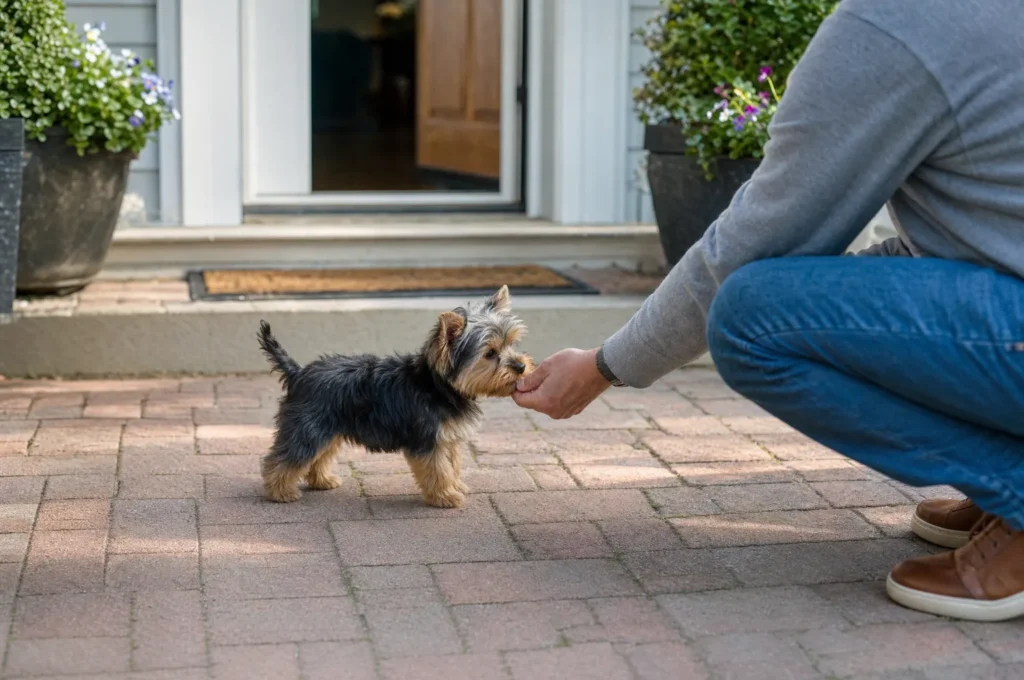
A story from Michael Northcutt, our founder: When someone walked in our front door, our puppy wiggled so hard her whole body curved like a C. Then she peed on the floor.
It was a real puddle, right on the welcome mat or on someone’s shoes.
At first I thought it was a potty training problem. I took her out more and cleaned with enzyme cleaner, but nothing changed. She never had accidents any other time, only when people said hello.
I asked our vet about it, partly to rule out anything medical. They checked her and said it sounded like excitement peeing. Some puppies do it, and many grow out of it. They gave me a few tips, and told me to call if anything changed.
The tips went against everything my friends wanted to do. Don’t greet her right away. Keep your voice low. Don’t bend over her. Let her calm down first, then say hi, quietly, maybe crouched to the side. And greet her outside if you can, where a little pee doesn’t matter.
That was the hard part. Everyone wanted to squeal and scoop her up. But every squeal meant a puddle.
So I made a card and taped it on the inside of the front door, at eye level. That way I’d see it before I opened it. “Puppy greeting: Ignore for 2 minutes. Calm voice. Say hi outside if you can.”
I read it out loud to guests at the door. A few forgot and squealed, and I grabbed a towel.
It took a few months. But one day my friend came in, waited by the door, crouched down, and said “hi” softly. Our puppy wiggled, sniffed her hand, and walked away. No puddle.
I keep a towel in the basket by the front door, just in case. Mostly, it just sits there now.
His card used a two-minute wait. The AKC gives no set number, so let her calm behavior decide when the hello starts.
Is my puppy marking, or just peeing a lot?
The AKC calls urine marking a normal dog behavior. It’s small amounts of pee in several spots, often on upright things. It usually starts around 6 to 9 months. Intact males mark most, but neutered males and females can too.
Its first step is ruling out health problems that can look like marking. Then clean every spot with an enzymatic cleaner, and use a UV light to find any you missed. Our enzyme cleaner for dog urine guide shows how to use one.
Tip: Keep the enzyme cleaner where the accidents happen, not in the hall closet. Then every spot gets it, even at 11 p.m.
Why is my puppy peeing on my bed?
For a young puppy, it’s usually a plain potty training accident, which the AKC says is common in young dogs. The AKC’s bed-peeing guide also lists marking, a health problem like a UTI, and fear or anxiety. A frightened dog may look for a safe spot, such as your bed.
- Wash the sheets and comforter, and treat the mattress with an enzymatic cleaner, so the smell doesn’t pull her back.
- Keep her out of the bedroom with a gate, pen or crate until the accidents stop.
- Take her out at her likely times, like after meals, and reward her for going there.
- If you catch her about to go, calmly interrupt, take her out, and reward her when she finishes.
- If it’s new, see your vet first to rule out a health problem.
Puppy peeing FAQ
Should I limit my puppy’s water so she pees less?
Keep fresh water available. Do not reduce drinking to hide frequent urination. Ask your vet about increased thirst.
Is it normal for a puppy to pee 20 times a day?
It can be, for a young puppy, since each nap, meal, drink and play session can add a trip. Twenty tiny squats with no nap, meal, drink or play before them point toward a vet visit.
Why does my puppy pee in her crate or on her bed?
The crate may be too big, so she can pee at one end and sleep at the other. A crate divider might help, the AKC’s crate column suggests, if she can still turn around and lie down. If the soiling goes on despite steady training, have your vet check her.
When will my puppy stop having accidents?
The AKC’s crate column says there’s no magic number of months when accidents stop. It depends on the dog, the breed and how consistent the training is. Humane World puts house training at 4 to 6 months, though it varies by puppy.
How we put this together: We read the five sources below, plus page one of Google and owner forum questions, in October 2026. Nobody at LoveMyPuppy is a veterinarian. If her peeing worries you, call yours.
Sources
- American Kennel Club (AKC): Why Does My Puppy Pee When They Greet Me?, How to Potty Train Your Puppy, Dog Urine Marking vs. Peeing, My Dog Pees In Her Crate and Why Do Dogs Pee on Beds?
- PetMD: Why Is My Dog Peeing So Much? Causes, Symptoms, and When To Worry (Katie Grzyb, DVM) and Dog Surgery Aftercare: What’s Normal and What’s Not (Christina Fernandez, DVM, DACVECC)
- Cornell University College of Veterinary Medicine, Riney Canine Health Center: Urinary tract infections
- VCA Animal Hospitals: Testing for Increased Thirst and Urination
- Humane World for Animals: How to Crate Train Your Dog or Puppy and How to Potty Train a Puppy