

Short answer: Pick one potty spot before day one. Take her there on a clock, and leave a few minutes early to cover the hall and elevator.
Carry her the whole way at first. No shots yet? A pad corner or a real grass patch at home bridges the gap.
Every trip down from a high floor
- Leash on, bags and paper towels in your pocket, before you open the door.
- Sniffing or circling? Scoop her up. Preventive Vet suggests carrying your pup down the hall and in the elevator.
- In the elevator, keep the puppy and entire leash inside the car. Use the door-open button when needed.
- Nothing after 5 minutes on the grass? Head back up and watch her closely.
You’re at the elevator in slippers, holding a wiggling puppy and a roll of paper towels. The car stops on every floor. By the lobby, your sleeve is warm.
Back upstairs, did she go at noon? Your partner thinks so. Nobody wrote it down. And the pad corner smells, so you’re doing deposit math.
Each miss that still smells invites the next one. Dogs frequently return to spots that still smell like old accidents, the AKC warns.
Potty training a puppy in an apartment means teaching her one spot, with a hallway and an elevator in between. House training in a high-rise isn’t that much different from anywhere else, in the AKC’s view. The extra floors are the hard part, and they matter less each month as her bladder grows.
We sell the puppy planning kit and washer-cleaner tablets linked below. The free tools are separate from those paid offers.
✓ Built on guidance from the AKC, Preventive Vet, Whole Dog Journal, Adopt a Pet and VCA Animal Hospitals.
How do you potty train a puppy in an apartment?
Use the same basics as a house with a yard, plus a head start on every trip.
What you need by the door
- Her leash and harness, hanging next to your shoes
- Small treats in a jacket pocket
- Poop bags, paper towels and a small bottle of enzyme cleaner
1. Pick her spot before the first trip
Choose where she’ll go for the next few months, then keep it there. If you use pads, Whole Dog Journal’s Kate O’Connor says not to move them once training starts.
Going outside? Pick one patch of grass close to the building door.
2. Go on a clock, then leave early
Start with frequent outings while she is awake, plus trips after sleep, meals and play. Add travel time for your building. Adjust from her signals and accidents instead of treating an age formula as a deadline.
Awake and playing, she needs to go far more often. Preventive Vet suggests her spot every hour to start. Go right after she wakes, and within about 5 to 10 minutes of eating, drinking or play.
Time the journey from your door to the potty spot. Leave early enough to cover elevator delays, and respond promptly to signals.
Our free Potty Break Timer can help organize reminders. It cannot tell you how long your puppy can safely wait.
3. Leave at the first sign, and lift her
Leave the moment you see the signs. Preventive Vet lists sniffing, circling, restlessness, suddenly stopping play and seeking out a corner. By then, outside may be too far, it warns. Set her on her indoor spot if you have one, or carry her all the way to the grass.
Once she’s older and more reliable, she can start walking there on her own four paws.
4. Same patch, a quiet wait, then the reward
Walk straight to her patch. Stand still, keep the leash loose, and let her sniff.
Wait to praise her until she’s finished. Preventive Vet warns that early praise can interrupt her before she’s empty. Then give the treat right there on the grass.
5. Clean every miss before the day ends
Don’t scold her. Yelling or rubbing her nose in it teaches her to hide where she goes, Preventive Vet explains. Treat the spot with an enzyme cleaner, so the smell can’t call her back. Our enzyme cleaner for dog urine guide walks you through it.
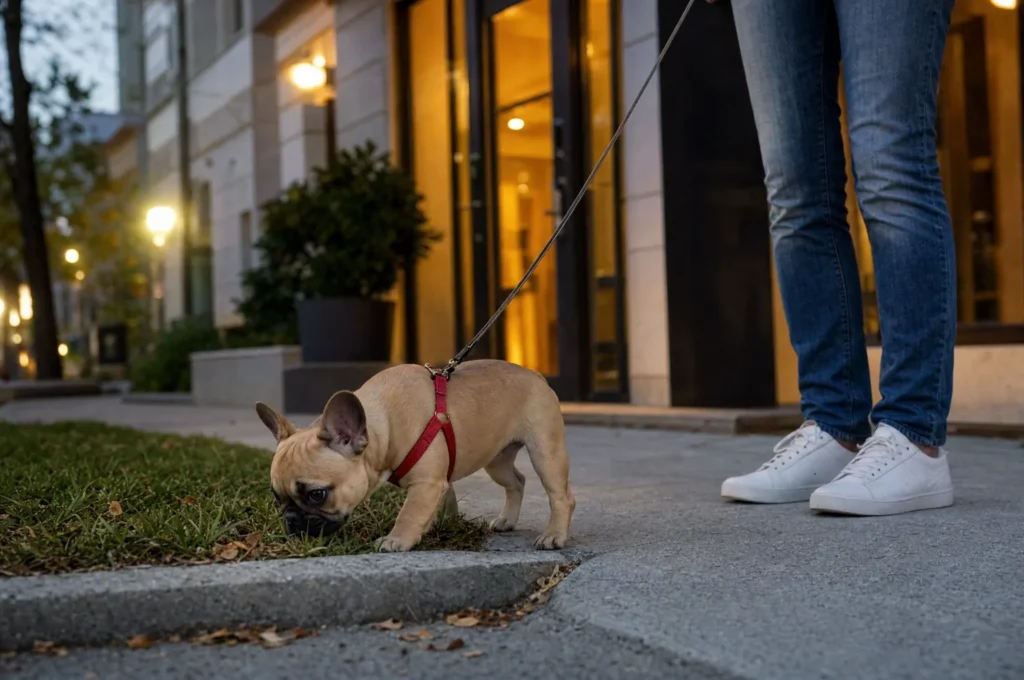
Pee pads, a grass patch or straight outside: which setup fits?
Your floor, her shots and her long-term spot decide which one fits.
| Setup | Fits when | Watch for |
|---|---|---|
| Outside only | Low floor, quick exit, someone home, and your vet okays the grass | Doable, but usually some accidents on the way, Whole Dog Journal finds |
| Pads first, then outside | Long days away, or a very small dog in a hard winter | Pads can sometimes slow the move outside, the AKC warns |
| Real grass patch indoors | Shots not done, and you want her outside later | Used grass needs tossing and replacing, per Preventive Vet |
| Grass patch on the balcony or patio | You have outdoor space, and your lease allows it | Waste that drains into the tray needs emptying, per the AKC |
| Puppy litter box | You want an indoor spot that suits your space and your puppy | Litter boxes can make it tough to travel with her, a trainer tells Adopt a Pet |
Preventive Vet’s trainer prefers real grass if outside is the long-term goal. Grass inside means grass outside feels familiar later.
“Puppies can imprint on what surface is okay to potty on.”
Cathy Madson, MA, FDM, CBCC-KA, CPDT-KA, writing for Preventive Vet
How do you set up an indoor or balcony grass patch?
A grass patch is a tray of sod or turf that gives her a bathroom on your floor.
- Choose real grass over plastic. Madson finds the plastic kind can be messy.
- Get one with a tray that catches drainage. Some come in containers, so you can empty what drains out, the AKC notes.
- Run it on the same clock. Take her to it when she shows the signs, and praise her there.
- Swap the grass as it wears out. Used real grass patches can go in your yard waste, Preventive Vet notes.
Check the balcony before using a grass tray: Secure gaps, prevent climbing and supervise every visit.
Plan how you will carry the tray for cleaning without spilling. Keep drainage away from neighbors and building walkways.
Her routine came from trial and error, so follow your patch maker’s care steps too.
Using pee pads in an apartment
Don’t toss treats onto the pad to lure her, O’Connor says. Dogs are unlikely to go where they get food, so reward her a few steps away.
For the full method, see our potty training with puppy pads guide.
How do you get a puppy down the elevator or stairs in time?
The risky moment is getting on or off, when a leash can catch in closing doors. Four habits from Preventive Vet’s elevator safety guide fit every potty trip.
- Short leash. Hold the whole leash, so none of it dangles near the doors.
- Hold the door. Keep a hand on it as you both step in and out.
- Carry small puppies. They move fast and are hard to see in a crowded car.
- Keep her focused on you. Then she’s less likely to follow someone else out. Leave your phone in your pocket.
Tip: Too big to hold? Have her sit right next to you, or between your legs, for the ride. The same guide finds that keeps her in a safe spot.
What if she pees in the hallway or elevator?
Clean it right away, and keep your voice calm. Preventive Vet suggests carrying poop bags, an old rag or paper towels, and a small bottle of cleaner.
Hallway accidents that leave a mark or a smell can cost you, Whole Dog Journal warns. Ask building staff how they want an elevator miss handled.
She wouldn’t go outside, then peed the minute you got back upstairs
You rode nine floors down, she sniffed and sniffed, and nothing happened. Back in the kitchen, she puddled. If she doesn’t go within 5 minutes, VCA Animal Hospitals advises taking her back inside and supervising her closely. At the first sign of restlessness, take her straight back out.
Can’t watch her every second? A short spell in her crate helps, since dogs generally prefer not to go where they sleep, the AKC notes. A hands-free leash clipped to you works too, Preventive Vet suggests, so she can’t wander off and have an accident.
Rain, snow or a freezing night
Outside is best when you can manage it, trainer Shir Limazati tells Adopt a Pet. Severe weather is one of her exceptions.
Whole Dog Journal’s O’Connor keeps potty pads on hand for weather emergencies. So on a stormy night, set her on her pad or patch instead of riding down.
Can you take a puppy outside before her shots in an apartment?
You can, as long as she stays off the ground other dogs use.
Puppies still waiting on vaccines shouldn’t go to areas other dogs use as a bathroom, Preventive Vet advises. In a building, that may be the only grass out front.
Until her vet clears her, a pad corner or grass patch at home is safer. Ask your vet which nearby ground is okay, and when. Our puppy shot schedule shows when busy dog spots are usually okay.
How do you leave her alone during work hours in an apartment?
Gone longer than she can handle in a crate? Preventive Vet suggests a long-term puppy zone with a potty area, using pee pads or real grass. A pad in her pen gives her a little space while you’re gone, the AKC adds.
A puppy left more than 3 hours will need a potty break, VCA cautions. A friend or pet sitter may be able to stop by.
As she grows, the AKC notes, you may switch to trips before and after work and before bed.
How do night trips work from an apartment?
Sleeping puppies may manage longer stretches, but they still need prompt access when they wake. Plan night breaks from her recent pattern.
The same AKC answer suggests moving the crate into your bedroom, so you hear her wake. O’Connor kept a crate by her bed with potty pads for night breaks, until her puppy could make it outside. For the crate itself, see our crate training guide.
Should you use pads and grass at the same time, or one at a time?
The AKC warns that pads can sometimes delay her switch to the outdoors. Madson agrees they can sometimes make it harder, so her outside-only pick is real grass.
O’Connor sees it differently. Pads don’t stop you from also training outdoors, she writes. She phased hers out as her puppies’ bladder control improved.
Not sure which camp to follow? Pick by where she’ll go at six months. Outside for life? Go with Madson. Pads for life, say a small dog on a high floor? Regular pads are fine, in Preventive Vet’s view. Using both? Keep each spot fixed and reward her the same way at each.
When should you call the vet or a trainer?
- Still struggling despite a steady routine. If training stays consistent and accidents keep coming, the AKC’s Dr. Burch advises a vet exam. With health ruled out, a trainer or behaviorist may be next.
- Any elevator scare or injury. Get her checked, even if she seems fine, Preventive Vet advises.
What should you do this week?
- Tonight: pick her one spot and stock the door.
- Tomorrow: time one trip from your door to the grass, and add that to every leave time.
- Before your first workday: set up her pen with a pad or patch.
Apartment potty training FAQ
Where should I put pee pads in an apartment?
Near the door is your best bet, the AKC suggests, so she learns to head there when she needs out.
Should I use puppy diapers in an apartment?
They can protect carpet early on, Whole Dog Journal says, but they don’t teach her where to go. Never leave her in one unsupervised, since she could chew and swallow pieces.
What’s the fastest way to potty train a puppy in an apartment?
Stick to a consistent schedule, trainer Shir Limazati tells Adopt a Pet. She also recommends staying outside five to 10 minutes after the puppy goes. Otherwise a puppy may learn the fun ends once she pees, then hold it and have accidents inside.
How long does it take to potty train a puppy in an apartment?
Some puppies build reliable habits within days, while others may need several months, the AKC notes. Whole Dog Journal’s Kate O’Connor trained hers in a second-floor unit, with one stairway to the grass. In a high-rise, she cautions, it may take longer.
What do I do with dog poop on a balcony?
Bag it and drop it in a dog waste container, the AKC suggests, then empty it when full. Preventive Vet likes one with a charcoal filter to cut odor.
Editorial review: Updated October 23, 2026 after reviewing search results and relevant source guidance. This is an editorial guide, not a product test or individualized professional advice.