

Short answer: Poodles, Bichons, Maltese, Yorkies and Portuguese Water Dogs are well-known low shedders. No dog sheds zero hair, though, and no dog is allergy-free. Most dogs that don’t shed need more brushing and trims, not less.
Here is the honest trade. A Labrador sheds hair onto your floor. A Bichon holds that hair in its coat, where it tangles unless you brush it out. Pick the breed whose grooming you can keep up with.
Maybe you are tired of lint-rolling before you leave the house. Maybe your kid sneezes at every friend’s house with a dog. Either way, you want the dog without the fallout.
The worst outcome isn’t fur on the couch. It’s bringing home a puppy your family can’t live with, then facing a choice nobody wants to make. This guide helps you avoid that.
In this guide:
- Why a “hypoallergenic” puppy can still set off allergies, and what a 2012 study found when it measured
- The one AKC number to check before you fall for a breed
- Two popular low shedders that are missing from the AKC allergy list
- The cheapest grooming plan there is, and what it costs to start
Who is this guide for?
It is for people who don’t have a puppy yet and want less dog hair at home. It also helps families with allergies who are deciding whether a dog can work at all.
- You are choosing a first dog and hate the idea of fur on every surface.
- Someone in your home has allergies, and you keep hearing the word “hypoallergenic.”
- You love the look of a doodle or poodle but don’t know what the upkeep really costs.
This is general education, not medical advice. Allergy questions belong with your doctor or an allergist.
Which dog breeds don’t shed?
No breed has zero shedding, but the AKC rates many breeds at the lowest shedding level. Poodles, Bichons, Maltese, Yorkies, Wheatens and Xolos are among them.
The table below uses the American Kennel Club’s own breed ratings. The AKC scores each breed from 1 to 5 for shedding and for coat grooming. A 1 means very little, and a 5 means a lot. Breed sizes are the AKC’s ranges too. Nearly all of these breeds appear on the AKC’s list of breeds for people with allergies. Two do not, and the table says so.
| Breed | Size | Coat | Shedding / grooming | Good to know |
|---|---|---|---|---|
| Poodle (Toy, Miniature, Standard) | Toy 4 to 6 lb, Miniature 10 to 15 lb, Standard 40 to 70 lb | Curly | 1 / 4 | Rated 5 for trainability and for need of mental exercise |
| Bichon Frise | 9.5 to 11.5 in, 12 to 18 lb | Curly, double | 1 / 5 | Rated 5 with young children |
| Maltese | 7 to 9 in, under 7 lb | Long, silky | 1 / 4 | Rated 3 with young children |
| Yorkshire Terrier | 7 to 8 in, about 7 lb | Long, silky | 1 / 5 | Top grooming score of 5 |
| Shih Tzu | 9 to 10.5 in, 9 to 16 lb | Long, double | 1 / 4 | Low shedding, but not on the AKC allergy list |
| Havanese | 8.5 to 11.5 in, 7 to 13 lb | Long, silky | 2 / 3 | Not on the AKC allergy list |
| Coton de Tulear | 9 to 11 in, 8 to 15 lb | Long, wavy | 2 / 4 | Rated 5 with young children |
| Chinese Crested | 11 to 13 in, 8 to 12 lb | Hairless or silky | 1 / 2 | One of the lightest grooming loads here |
| Miniature Schnauzer | 12 to 14 in, 11 to 20 lb | Wiry, double | 3 / 4 | On the AKC allergy list, rated 5 for trainability |
| Bedlington Terrier | 15 to 17.5 in, 17 to 23 lb | Curly | 1 / 3 | Rated 3 with young children |
| Soft Coated Wheaten Terrier | 17 to 19 in, 30 to 40 lb | Silky, wavy | 1 / 4 | Rated 5 with young children |
| Lagotto Romagnolo | 16 to 19 in, 24 to 35 lb | Curly | 1 / 2 | Lower grooming score than most curly coats |
| Portuguese Water Dog | 17 to 23 in, 35 to 60 lb | Wavy or curly | 2 / 4 | Rated 5 for energy and trainability |
| Xoloitzcuintli (Xolo) | Three sizes, 10 to 55 lb | Hairless or short | 1 / 1 | Lowest grooming score in this list |
| Giant Schnauzer | 23.5 to 27.5 in, 55 to 95 lb | Wiry, double | 2 / 4 | Rated 5 for energy and need of mental exercise |
Look at the grooming numbers. Most low shedders score 4 or 5. For contrast, the AKC rates the Labrador and Golden Retriever 4 for shedding but only 2 for grooming. Less hair on the floor usually means more work on the dog.
What are the best small, medium and large non shedding dogs?
Small picks include Toy and Miniature Poodles, Bichons, Maltese and Yorkies. Medium picks include Wheatens, Lagottos and Portuguese Water Dogs, and large picks are Standard Poodles and Giant Schnauzers.
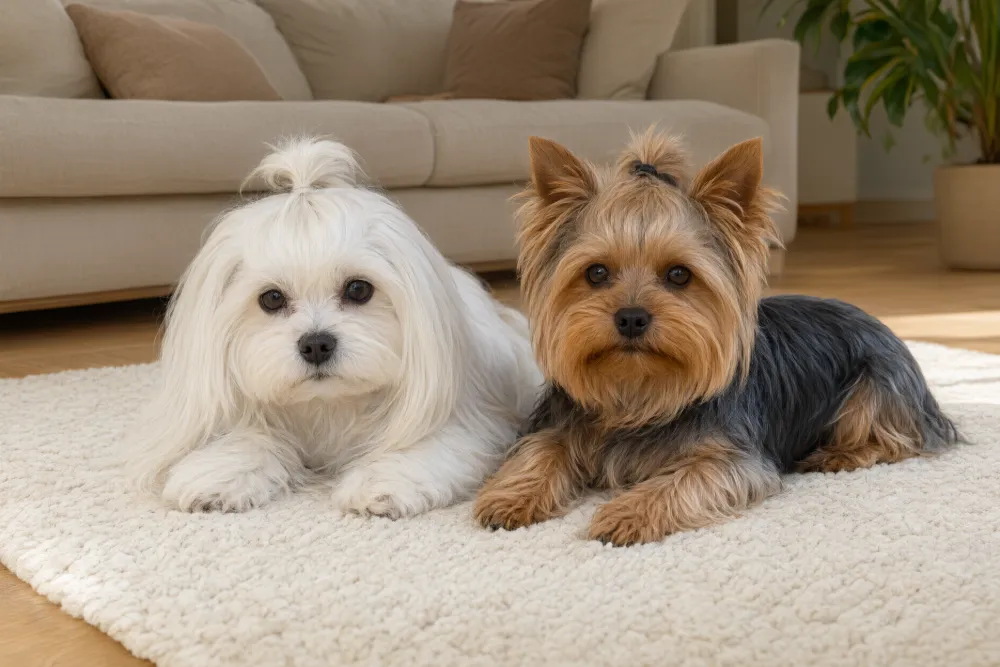
Small dogs that don’t shed. This is the biggest group. Toy Poodles, Maltese and Yorkies all weigh about 7 pounds or less, per the AKC. They suit apartments, but long silky coats like the Maltese and Yorkie need steady brushing.
Medium-sized dogs that don’t shed. The Soft Coated Wheaten Terrier, Lagotto Romagnolo, Bedlington Terrier and Portuguese Water Dog sit here. The Lagotto stands out with a grooming score of only 2. The Portuguese Water Dog is a strong pick for active families, with top scores for energy and trainability.
Large dog breeds that don’t shed. There are fewer choices. The Standard Poodle and Giant Schnauzer are the classic two. Both score 5 for mental exercise needs, so they want a job, not just a yard.
Which dogs don’t shed much and need little grooming?
Short, smooth coats are the low-work choice. The AKC rates the Whippet, Basenji, Greyhound and Chihuahua 2 for shedding and 1 for grooming.
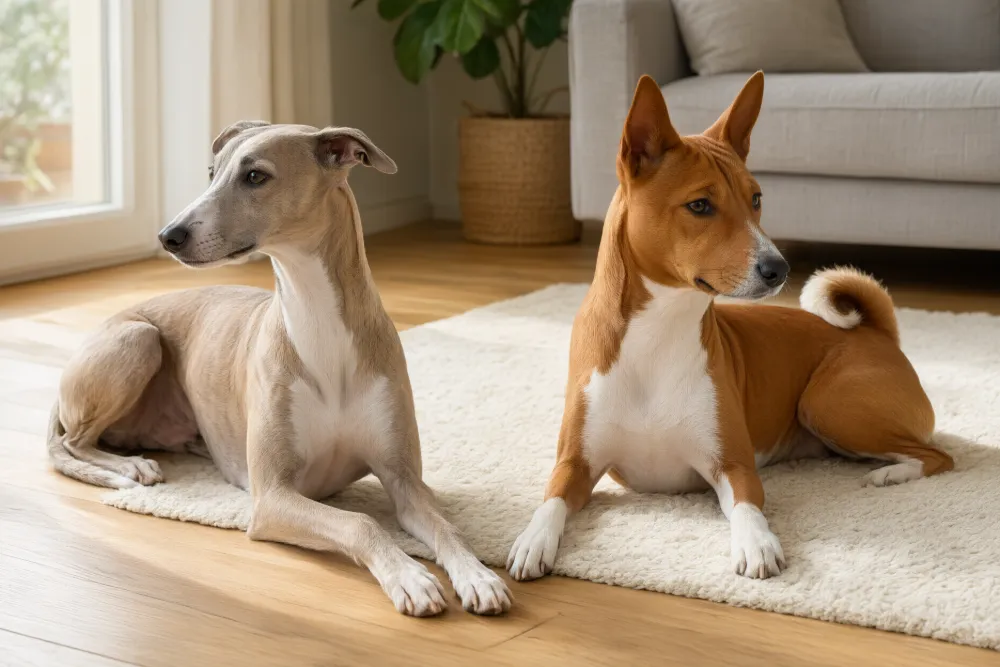
These dogs still drop some hair. But the AKC rates their grooming needs at 1, the lowest score. That means no haircuts and far less brushing than a Poodle or Bichon.
- Whippet: gentle, and rated 5 out of 5 with young children. It rarely barks, with a barking score of 1.
- Basenji: also scores 1 for barking. Training takes patience, with a trainability score of 2.
- Border Terrier: a scruffy coat rated 2 for shedding and 2 for grooming, and 5 with young children.
- Chihuahua: tiny and long-lived, 14 to 16 years. The AKC rates it 1 with young children, so it suits adult homes.
None of these four are on the AKC allergy list. Pick them for less fur work, not for allergies.
Are hypoallergenic dogs really allergy-free?
No, the AKC, Mayo Clinic and a peer-reviewed study all say no breed is truly hypoallergenic. Low shedders may leave less hair around, but allergens also come from skin, saliva and urine.
The AKC puts it plainly:
“… there are no 100% hypoallergenic dogs, dog breeds, or mixed-breeds …”
American Kennel Club, Hypoallergenic Dogs
The AKC does say some breeds are less allergenic for many people. Mayo Clinic explains why no breed escapes the problem. Dog allergens are found in dander, saliva, urine and sweat and on their fur. A dog with no hair still has skin and saliva.
Research backs this up. A 2012 study in the Journal of Allergy and Clinical Immunology measured a major dog allergen in homes. It compared so-called hypoallergenic breeds with Labradors and other dogs. It found no differences in airborne allergen levels between breeds.
The numbers surprised people. The study tested hair from 196 “hypoallergenic” dogs and 160 other dogs. The “hypoallergenic” dogs carried about three times more of the main allergen in their hair. That was 2.26 versus 0.77 micrograms per gram. Their homes still did not end up with more of it in the air.
Where the advice conflicts. Breeders and sellers often market a puppy as “hypoallergenic.” Many allergic people do report feeling better around certain breeds. The research says the dog in front of you matters more than the label. Treat the word as a hopeful hint, never a promise.
Allergies in your family? Talk to your doctor or an allergist before you commit to any puppy. Mayo Clinic advises that you make sure you don’t have pet allergies before adopting or buying. Ask the allergist how to safely spend time with the actual dog first.
Why do dogs that don’t shed get mats?
Their loose hair stays caught in the coat instead of falling out. Without regular brushing, those trapped hairs twist into knots, and knots tighten into mats.
Master groomer Melissa Verplank explained this to PetMD. Hair shafts have tiny barbs, and some coats have more than others.
“The more barbs in the hair shaft, the more likely to mat.”
Melissa Verplank, certified master groomer, in PetMD
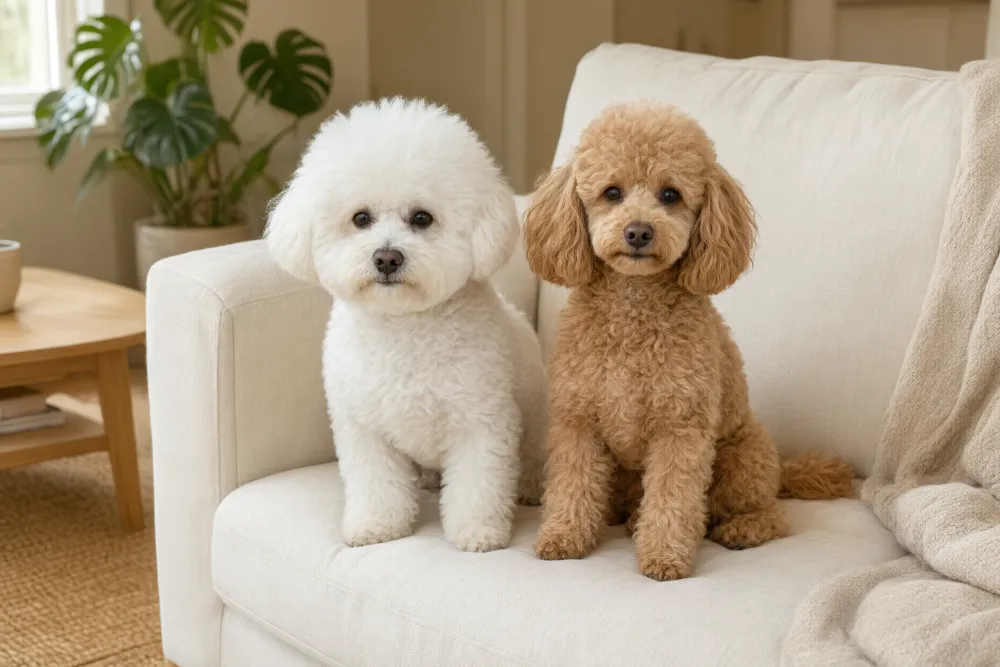
She names the Poodle and the Bichon Frise among the most mat-prone dogs. Mats often start where fur rubs: under the collar, behind the ears, in the armpits and on the lower legs.
Mats are not just a looks problem. Verplank warns that sores, injuries and bugs can hide under a matted coat. Badly matted fur sometimes has to be clipped off.
How much grooming time and money should you plan for?
Plan on brushing several times a week, plus regular professional trims for most curly and long coats. Ask local groomers for prices before you pick a breed.
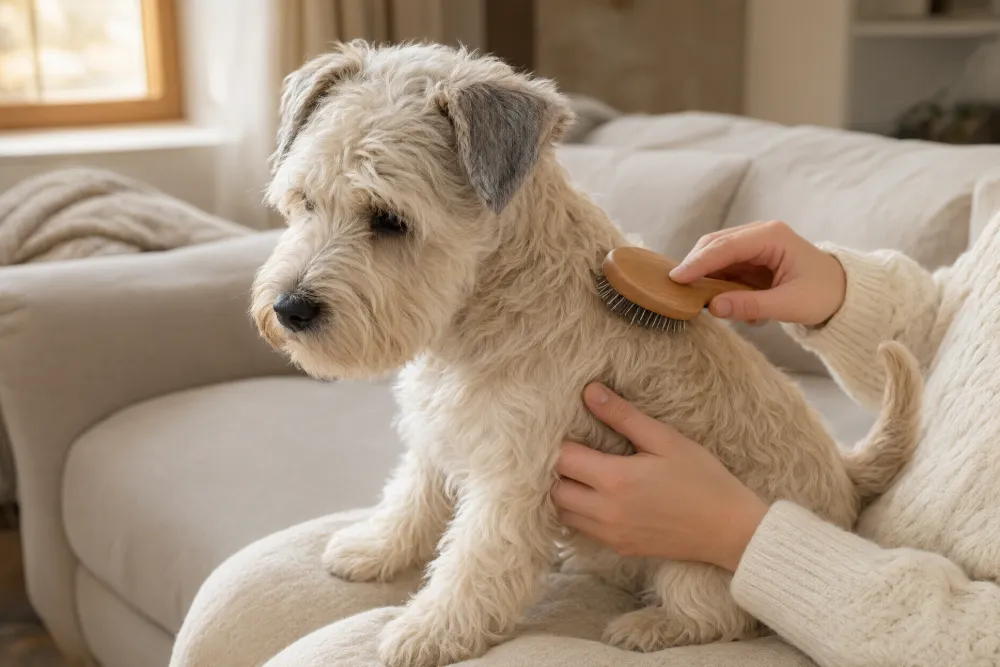
Time. PetMD’s groomer advice is to brush anywhere from once every couple of weeks to daily, depending on the breed. Expect the breeds with AKC grooming scores of 4 or 5 to need the most brushing. Hairless Xolos and Chinese Cresteds need the least.
Money. The ASPCA’s cost table lists $300 a year for professional grooming for a dog. That figure is from its 2021 update and covers dogs in general. A curly or long coat that needs regular haircuts can cost more. Prices vary a lot by city and coat size, so call two groomers near you.
The ASPCA also lists $40 for first grooming tools, like brushes and clippers. A brush, a comb and a few minutes of practice each night are the cheapest grooming plan there is.
Michael’s story: A friend’s new puppy had her first groom cut short because the dryer scared her. The groomer sent him home with a little card. It said she was good with baths and brushing, but nervous with dryer noise and front feet. A few minutes of paw handling and treats each night fixed it within a month. Start that practice on day one, and grooming stays calm and cheap.
The comb is for small tangles. Tight mats right against the skin are a job for a groomer or your vet. New to it? Our guide to using a dematting comb gently walks you through the first sessions.
Are doodles hypoallergenic?
No dog is, and doodles are mixed breeds, not AKC breeds. A Goldendoodle or Labradoodle may shed little or a lot, and its coat still needs serious brushing.
You won’t find the Goldendoodle or Labradoodle in the AKC’s breed list. The AKC’s own wording covers them anyway: no breed or mixed breed is 100% hypoallergenic.
The 2012 study above tested Labradoodles too. The so-called hypoallergenic group, Labradoodles included, had more of the main dog allergen in hair samples. Floor dust in Labradoodle homes was lower, but airborne levels matched the other dogs.
Doodle coats are often curly or wavy, like a poodle’s. So plan for the poodle-style care in the table, not the retriever-style care. If you are researching the best brush for a Goldendoodle, the comb above is one piece of that kit.
What are the cleanest dog breeds?
If clean means little hair and little drool, look at breeds the AKC rates 1 for both. That includes Poodles, Bichons, Maltese, Yorkies, Shih Tzus, Cotons and the hairless Xolo and Chinese Crested.
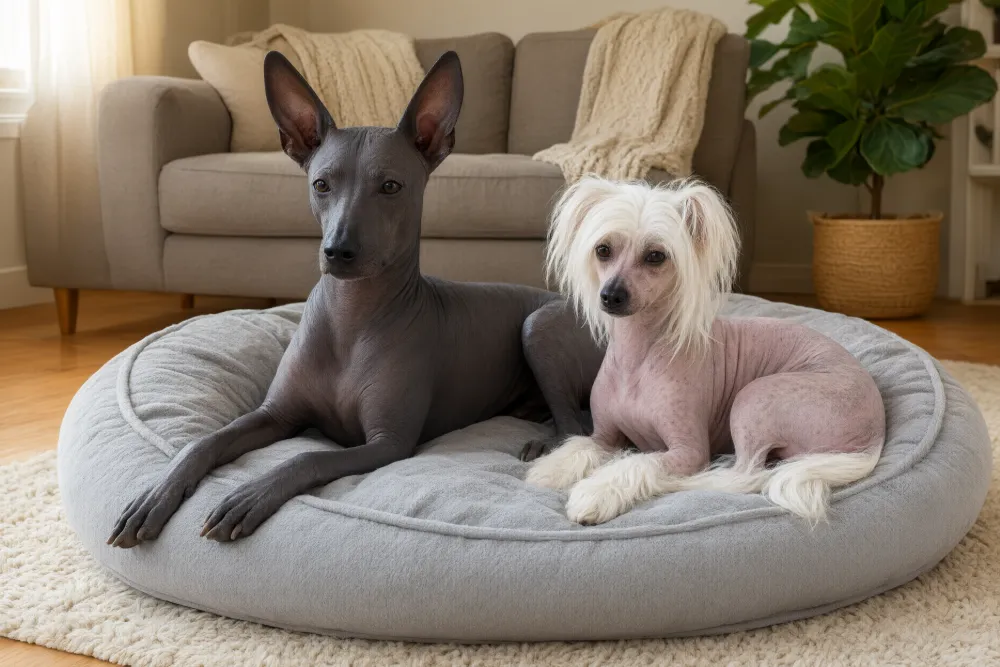
The AKC also scores drooling from 1 to 5. Schnauzers, Wheatens, Lagottos and Portuguese Water Dogs score 2 for drool. That is still low.
The two hairless breeds win on grooming time, with AKC grooming scores of 1 and 2. They still carry allergens on skin and in saliva. And no breed stays clean through puppy potty training. Plan for accidents whichever breed you choose.
How do you choose the right low-shedding puppy?
Match the grooming load to your real week, then meet the actual dog. For allergies, get medical advice first and spend time with the puppy before you commit.
- Be honest about time. Can you brush a few minutes most nights? If not, look at the lower grooming scores, like the Xolo, Chinese Crested or Lagotto.
- Price the groomer first. Call two local groomers and ask what your short-list breeds cost to trim.
- Match energy to your life. Portuguese Water Dogs, Giant Schnauzers and Standard Poodles score high for energy or mental exercise.
- Check the kid score. With young children, the AKC rates Poodles, Bichons, Wheatens and Cotons, among others, 5 out of 5.
- Meet the dog, not the label. The 2012 study found big differences between dogs of the same breed. Spend time with the real puppy and its parents.
- Allergies? Ask a professional. Your doctor or an allergist should guide this step, not a breeder or a website.
Not set on a low shedder? A shedding breed with a 2 for grooming can be easier day to day. You just trade brushing time for cleanup. Our guide to lint rollers for pet hair covers that side of life.
What are the calmest, longest-living and apartment-friendly dogs that don’t shed?
Five low shedders we checked score 3 of 5 for energy. They are the Maltese, Shih Tzu, Havanese, Coton and Chinese Crested. The Coton lives the longest, at 15 to 19 years.
What is the calmest dog that doesn’t shed?
None of the low shedders we checked score 1 or 2 for energy on the AKC scale. The calmer ones score 3: the Maltese, Shih Tzu, Havanese, Coton de Tulear and Chinese Crested. Poodles, Bichons and Xolos score 4, so they need more play and walks.
Which non shedding dogs suit apartments and seniors?
Look for small size, a high adaptability score and little barking. The AKC rates the Shih Tzu and Havanese 5 for adaptability. The Coton scores just 1 for barking, which neighbors will love.
Which low-shedding dogs live the longest?
The AKC lists the Coton de Tulear at 15 to 19 years. The Chinese Crested and Xolo reach 13 to 18 years, and the Shih Tzu and Toy Poodle up to 18. A long life is a long grooming commitment too, so plan for it.
Which dogs don’t shed or smell?
No breed is smell-free, and the AKC does not rate odor. The low shedders here all score 1 for drooling, which helps. Short, smooth coats like the Whippet and Basenji are also the easiest to keep clean.
When should you seek professional help?
See a doctor or allergist for any allergy symptoms or before committing to a dog. Call a groomer or vet for tight mats, skin sores or a dog that panics during grooming.
- Allergy symptoms around dogs: sneezing, itchy eyes, wheezing or hives. See your doctor. Mayo Clinic says to get emergency care if wheezing or shortness of breath quickly gets worse.
- Mats tight against the skin: don’t pull or force them. A groomer or vet can remove them safely.
- Red skin, sores or a bad smell under the coat: call your vet.
- A puppy who panics during brushing: slow down, and ask your groomer or a qualified trainer for help.
What are the next steps before you bring a puppy home?
Short-list two or three breeds, price local grooming, and settle the allergy question with a doctor. Then plan the first two weeks so the whole house knows the routine.
- Pick two or three breeds from the table that fit your time and space.
- Call two groomers and ask about trim prices for those breeds.
- If anyone has allergies, book a doctor or allergist visit first.
- Buy a brush and comb before day one, and start with short sessions.
- Check which foods are unsafe with our free puppy and dog food checker.
- Plan who feeds, walks and brushes the puppy each day.
Dog breeds that don’t shed: FAQ
Can I be allergic to one dog and not another of the same breed?
It is possible, because allergen levels vary a lot from dog to dog. The 2012 study found differences between breeds were small compared with differences within a breed.
Do hairless dogs cause allergies?
They can, because dog allergens also come from skin, saliva, urine and sweat. Mayo Clinic says no breed is truly hypoallergenic, hairless or not.
Which low-shedding breeds are easiest to train?
The AKC rates Poodles, Miniature Schnauzers and Portuguese Water Dogs 5 out of 5 for trainability. Poodles and Portuguese Water Dogs also need lots of exercise for their minds.
Do I need to brush a dog that doesn’t shed every day?
It depends on the coat, from every couple of weeks to daily. Long silky and curly coats with high AKC grooming scores need the most, so ask your groomer for a schedule.
Sources
- American Kennel Club: hypoallergenic dog breeds, with breed profiles for size, shedding and grooming ratings
- Journal of Allergy and Clinical Immunology (Vredegoor and others, 2012): dog allergen levels in hair and homes by breed
- Mayo Clinic: pet allergy symptoms and causes
- PetMD: matted hair in dogs, with master groomer Melissa Verplank
- ASPCA: pet care costs, including professional grooming