
How-to guide · Puppy grooming
How to Use a Dematting Comb Without Hurting Your Puppy
 By Michael Northcutt, PhD · Last updated October 9, 2026 · 10 min read
Just got your comb? Thank you. Start at Step 1 and keep the first try short.
Short answer: Hold the fur at the base, between the knot and the skin. Start at the tip of the knot with the wide side. Use short, gentle strokes and work inward. Finish with the fine side. Stop at any sign of pain. Tight mats against the skin are a job for a groomer or vet.
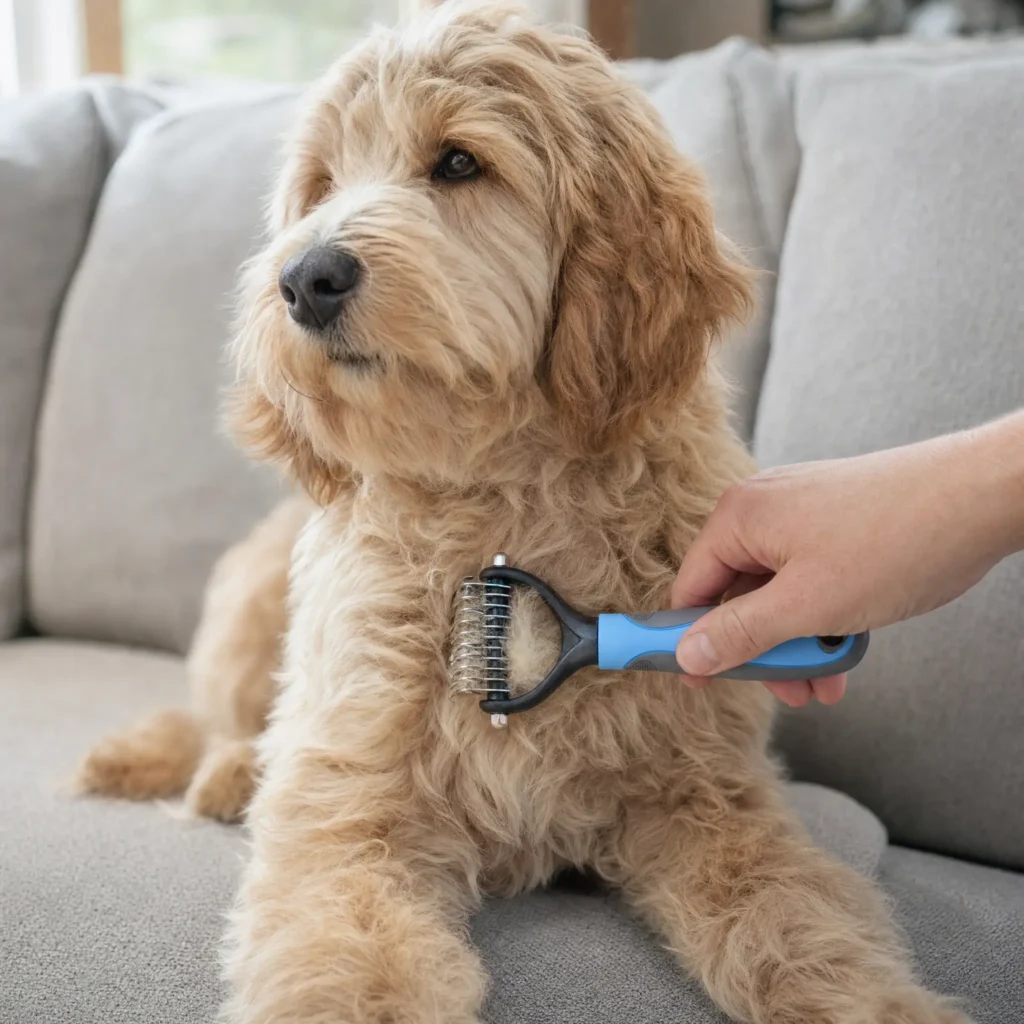
You found a knot behind your puppy’s ear. Now you are scared. What if the comb pulls? What if she yelps and hates brushing forever?
That fear is a good sign. It means you will go slow. This guide shows you how to comb out small knots gently. It also shows you when to stop and call a pro.
What does a dematting comb actually do?
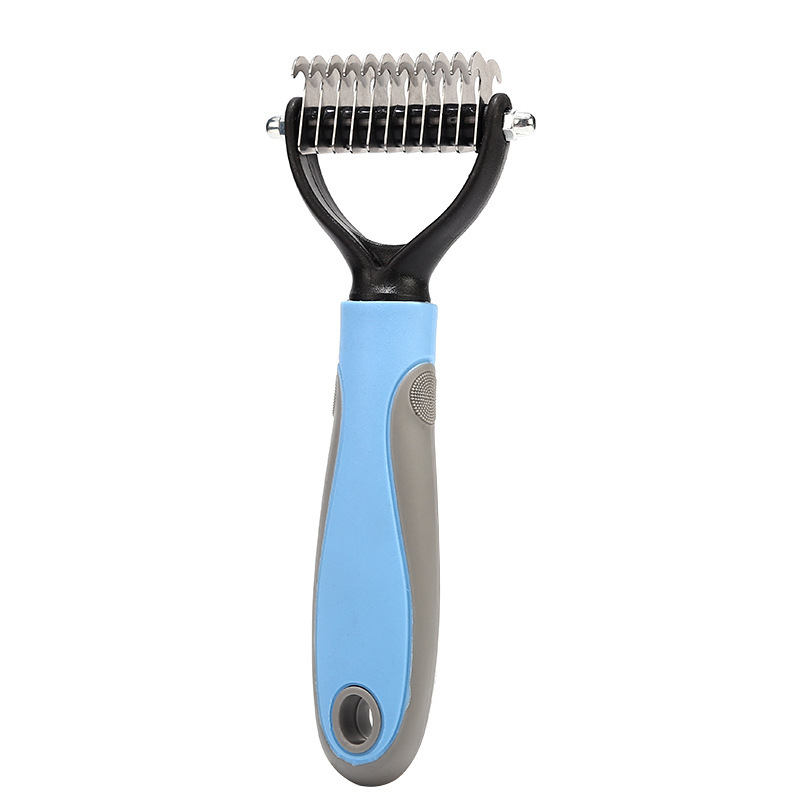
A dematting comb has blades instead of plain teeth. They slip into a small knot and loosen it a little at a time. Done right, the knot comes apart without a hard tug on the skin.
Ours is double-sided. The wider blades work tangles loose. The finer blades thin out loose, fluffy undercoat. The tips are rounded, and the handle has a soft grip. It measures about 9.5 x 17.5 cm, or about 3.7 x 6.9 inches.
How is it different from other grooming tools?
- Slicker brush: fine wire bristles that brush the top coat. Use a light touch, as the AKC advises. It often glides over knots that sit underneath.
- Metal comb: plain steel teeth. Groomers use it for the “comb test” to find hidden knots.
- Mat splitter: a sharper tool that cuts mats into pieces. It is best left to groomers.
- Detangler: a pet spray that makes hair slippery, so knots loosen more easily.
When should you use a dematting comb, and when should you not?
A dematting comb is for small knots and early tangles. It is not for mats glued to the skin.
Use it when:
- The knot is small and you can lift it away from the skin.
- You can slide a finger between the knot and the skin.
- Your puppy is relaxed and the skin under the knot looks normal.
Do not use it when:
- The mat is tight against the skin and will not lift.
- A large area feels like felt or one solid pad. Groomers call this “pelted.”
- The skin under the mat is red, wet, smelly or sore.
- The mat is near the eyes, ears, genitals or bottom.
- Your puppy cries, snaps or keeps pulling away.
In those cases, see a groomer or your vet. A veterinarian writing for PetMD gives these same warning signs. A groomer may suggest a gentle shave-out of the spot. That is often the kindest choice, not a failure.
Never cut a mat out with household scissors. Mats pull the skin up into the knot. One wiggle can mean a cut.
Catch knots while they are still small. Our double-sided puppy dematting comb is $14.99 with free US shipping.
See the dematting comb45-day money-back guarantee. Not happy? Full refund, no need to send it back.
How do you get ready before you comb?
Most “the comb hurt my puppy” stories start before the first stroke. A tired, calm puppy and a good setup do half the work.
- Pick a calm moment. After a walk or a play session works well.
- Find good light. You need to see where the knot ends and the skin begins.
- Work on a dry coat, lightly misted. Groomers warn that bone dry hair adds friction. Soaking wet hair stretches and breaks.
- Bath first? Dry fully before you comb. Mats can tighten as wet hair dries.
- Have treats or a lick mat ready. Food turns grooming into something good.
- Keep sessions short. A few minutes is plenty at first.
The light mist and “not soaking wet” advice comes from Riverview Grooming. A detangler made for pets helps knots loosen, as PetMD also notes.
My story: the brush she thought was a toy
The first time I brushed my puppy, she attacked the brush. To her, it was a game of tug-of-war.
So I slowed way down. I stuck a lick mat to the floor with a little peanut butter. While she licked, I did three slow strokes along her back. Then the brush went away.
The next night, I did five strokes. Then I added her side, then her chest. If she turned toward the brush, I stopped. I waited until she went back to licking.
The brush only came out with the lick mat. I kept sticky notes inside the drawer so I would not rush:
3. 5. 5. 8. Side!Months later, I can brush her whole body while she licks. Slow was the fast way.
How do you use a dematting comb, step by step?
Work on one knot at a time. Here is the method I use, built on advice from groomers, PetMD and the AKC.
- Find one knot and check it. Feel it with your fingers. Can you lift it off the skin? If not, stop here and call a groomer.
- Loosen it with your fingers first. Gently tease apart any loose strands. A light mist of pet detangler helps.
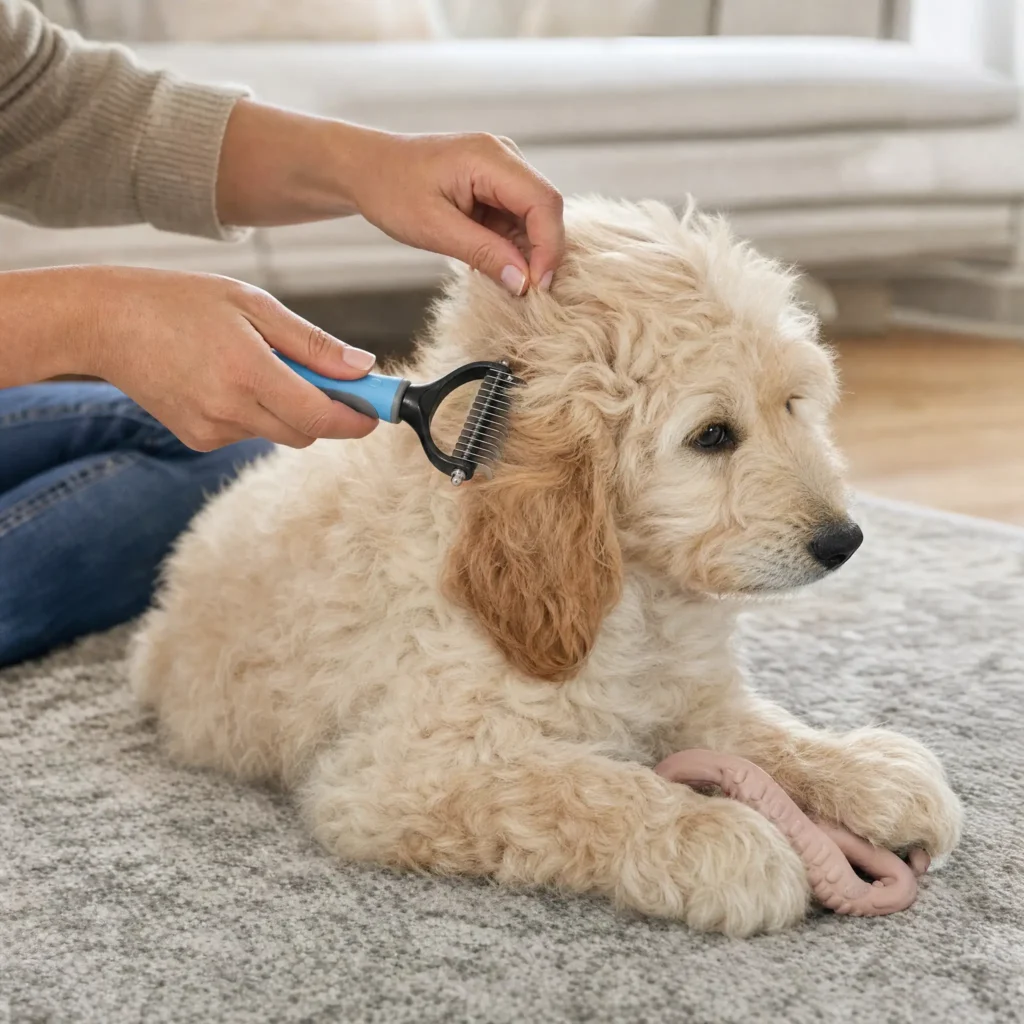
- Hold the fur at the base. Pinch the hair between the knot and the skin. Your hand takes the pull, not your puppy’s skin.
- Start at the tip of the knot. Use the wide side. Never start at the skin and drag outward.
- Use short, gentle strokes. Small picking motions, a little at a time. Work from the outer edge toward the skin.
- Flip to the fine side. Once the knot opens up, smooth the area and lift out loose undercoat.
- Do the finish check. Run a metal comb from the skin out to the tips. If it glides, you are done. If it catches, go back to Step 3.
- Reward and stop. Give a treat and end on a good note. A stubborn knot can wait until tomorrow.
The AKC notes you may not undo a whole mat in one sitting. A few minutes, a couple of times a day, over several days is fine.
Stop if you see any of these
- Red or pink skin, or skin that feels warm
- Your puppy pulling away again and again
- Growling, freezing, lip licking or a sudden stiff body
- Yelping or crying, even once
- A knot that will not lift away from the skin
Thin skin zones: armpits, ear edges and the groin. Skin there is thin and stretchy. Go extra slow, or let a groomer handle it.
Stopping is not quitting. It keeps grooming safe for next time.
What mistakes make dematting hurt?
- Starting at the skin. Dragging from the root pulls the whole knot against the skin.
- Not holding the base. Without your hand there, every stroke tugs the skin.
- Long, sawing strokes. Short picks open the knot. Long pulls tighten it.
- Pressing the blades down. Never press the blades into the skin.
- Combing a soaking wet coat. Wet hair stretches and snaps.
- Doing it all at once. A long session teaches your puppy to dread the comb.
- Only brushing the top. A coat can look fluffy on top and be knotted at the skin.
Where do mats start on a puppy?
Mats love friction. Check these spots first, a few times a week:
- Behind the ears. Soft, fine fur that knots fast.
- Under the collar or harness. It rubs all day.
- Armpits and where the front legs meet the chest. Every step rubs here.
- Legs and inner thighs. Wet grass and play make tangles.
- Around the tail and back end. Easy to miss from the top.
PetMD and the AKC both name these friction spots. Wet fur also tangles faster than dry fur, as Hound Therapy groomers point out.
Does your puppy’s coat type change how you comb?
- Doodles and poodle mixes: curly coats trap loose hair and knot quickly. Check them often and use the comb test.
- Retrievers and spaniels: feathering on the legs, ears and tail tangles most.
- Double coats: a soft undercoat sits under the outer coat. The fine side helps lift loose undercoat.
- Very short, smooth coats: these rarely knot. They do not need a dematting comb.
The AKC suggests starting to brush puppies right away, with a soft brush on that fluffy coat. Early, gentle handling pays off for life.
A friend’s story: the groomer called early
A friend booked a three-hour first appointment for his puppy. Forty minutes in, the groomer called him to come back. The puppy was scared of the dryer.
The groomer handed him a card. It said:
Good with: bath, brushing. Nervous with: dryer noise, front feet. Try at home: handling paws for treats, a few minutes a day.So they practiced a couple of minutes a night. He held a front paw for one second, then gave a treat. The dryer ran on low in the next room while the puppy ate. Over a couple of weeks, it moved closer.
Brushing only happened during lick mat time. A month later, they booked a short, quiet puppy visit early in the morning. It went well.
That card is still taped inside his grooming bin.
How often should you use a dematting comb?
A few minutes, two or three times a week, keeps most knots small. Long or curly coats may need a quick check most days. Short, frequent sessions beat one long fight.
Daily, you can simply run your fingers behind the ears and under the collar. If you feel a lump, it is comb time.
How do you keep mats from coming back?
- Check the friction spots a few times a week.
- Dry your puppy fully after baths, swims and rainy walks.
- Check under the collar or harness often, since it rubs all day.
- Use the comb test after brushing, not just a quick look.
- Ask your groomer about a shorter, easy-care trim if knots keep winning.
Bath day next? Our Puppy Bath Brush holds the shampoo, so baths are quick and calm. Then dry fully and comb.
See the bath brushHow do you clean a dematting comb?
Pull the fur off the blades after each session. A pinch of hair left behind makes the next stroke snag. Wipe the comb and let it dry fully before you put it away. Keep it with the leash or in your grooming bin, so it is always handy.
Dematting comb FAQ
Does a dematting comb hurt a puppy?
It should not, if you hold the fur at the base and use short, gentle strokes. Pain usually means the mat is too tight. Stop and see a groomer or vet.
Should I use a dematting comb on wet or dry hair?
Use it on a dry coat with a light mist of pet detangler. Avoid soaking wet hair. After a bath, dry your puppy fully first.
Which side of the dematting comb do I use first?
Start with the wider side to work the knot loose. Then flip to the finer side to smooth the area and lift loose undercoat.
Can I use a dematting comb on a young puppy?
Yes, for small knots, with short and calm sessions. Pair it with treats or a lick mat. Skip any spot your puppy cannot tolerate yet.
How often should I use a dematting comb?
A few minutes, two or three times a week, keeps most knots small. Long or curly coats may need a quick check most days.
Do I comb from the skin out or from the tip in?
Start at the tip of the knot and work toward the skin. Starting at the skin drags the whole knot and pulls.
How do I know the mat is really gone?
Run a metal comb from the skin to the tips. If it glides through with no catch, the knot is gone.
When should I see a groomer or vet instead?
Go when a mat is tight against the skin or covers a large area. Also go if the skin looks red or sore. Go if your puppy cries or snaps.
Can I cut a mat out with scissors?
No. Mats pull the skin up into the knot, so a cut is easy to make. Let a groomer clip it safely.
Small knots today, painful mats next month. A few calm minutes a week can keep the comb test easy. One double-sided comb, $14.99, free US shipping.
Get the puppy dematting combNot happy within 45 days of delivery? Full refund, no need to send it back.
Want a copy for the fridge? Use your browser’s Print button. Questions? Email support@lovemypuppy.store. A real person reads every email.
This guide is general information, not veterinary advice. For skin problems or pain, talk to your veterinarian.
Certified Companion Animal Rehabilitation Therapist, NC State College of Veterinary Medicine. 14 years of hands-on work with companion animals. Not a veterinarian.
Sources
- Alonge, J., DVM. How To Handle Matting in Dogs and Cats. PetMD.
- American Kennel Club. How to Overcome the 4 Biggest Dog Grooming Challenges.
- American Kennel Club. Dog Brushes: How to Choose the Right Dog Brush for Your Pet.
- Riverview Grooming. How to Master the De-Matting Comb Like a Pro.
- Hound Therapy. Matted Dog Fur: A Message From Your Groomer.