

LoveMyPuppy sells washer-cleaner tablets. Product links below are optional next steps after the troubleshooting checks.
You have already spent time on this. Another empty cycle feels frustrating when you cannot tell what changed.
Start by noting where the smell is strongest and when it returns. That observation gives the next check a purpose.
Choose a starting point, then use the six checks
| Start here | Go next |
|---|---|
| The empty machine smells, especially near the door or drawer | Check the cleaning cycle, then the gasket and dispenser |
| Only a particular towel or dog blanket smells | Go to the laundry-routine check before repeating a washer clean |
| Water remains, the machine reports an error, or the odor is near the waste connection | Use the drainage checks and contact the appropriate support service |
| Check | Look for | Next step |
|---|---|---|
| 1. Cleaning cycle | Wrong placement, an interrupted cycle or laundry left inside | Match the label to your washer manual |
| 2. Door gasket | Accessible hair, lint and damp residue in the fold | Clean and dry it using the approved method |
| 3. Detergent drawer | Film beneath removable inserts or inside the recess | Follow the model’s dispenser-cleaning instructions |
| 4. Accessible filter | Debris or signs of poor drainage | Use the manual’s safe draining and filter procedure |
| 5. Water and drainage | Standing water, repeated drain errors or smells near the waste connection | Use appliance support or a plumber as appropriate |
| 6. Laundry routine | Excess detergent, damp loads left waiting or odor in one fabric item | Review dosing and the fabric’s care instructions |
Check the cycle, then the surfaces it cannot wipe
1. Confirm what happened during the clean
Was the washer empty? Did the product go where its label required? Did the full maintenance cycle finish?
A short rinse or an interrupted cycle is not the same task. Correct the setup before judging the cleaner.
Do not add extra tablets or combine products to compensate. Follow the current label for repeat use.
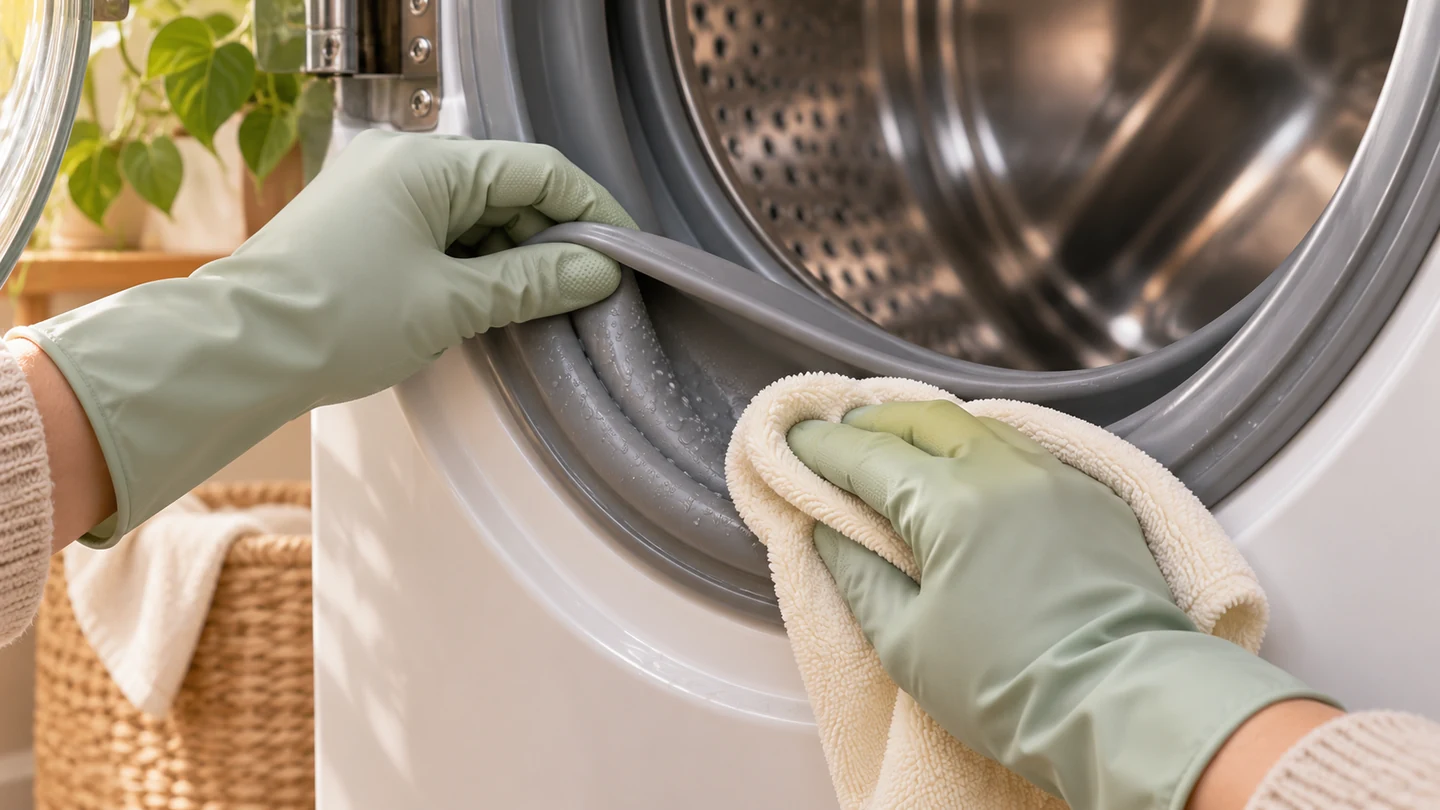
2. Inspect the rubber fold
On a front loader, gently expose the accessible gasket fold. Remove loose fur and lint, then use the approved surface-cleaning method.
LG identifies trapped debris in the gasket as one possible contributor to retained moisture and odor.
Do not pull the seal off the machine. Damage or leakage needs a different response from ordinary wiping.
3. Look underneath the dispenser inserts
The visible top of the drawer can look fine while residue remains underneath.
Check which inserts are removable. Wash them according to the model’s instructions, then reassemble them correctly.
For an automatic dispenser, use its specific reservoir-cleaning procedure. Do not pour household cleaning mixtures into the tank.
Check drainage before treating the smell again
4. Follow the filter procedure for your model
A user-serviceable drain filter may need attention. Not every washer has the same access panel or filter arrangement.
Let hot water cool and follow the manual’s power-off and draining steps. Prepare the container and towels it recommends.
Do not unscrew a filter while the machine contains hot water. If access is unclear or the cap will not release, stop.
5. Notice where water remains
Standing water and recurring drain errors are useful information for appliance support. A cleaner cannot repair a drainage fault.
If the smell seems centered around the waste connection, our washer sewer-smell guide explains the separate questions.
Do not pour drain unblocker into the washing machine. Get model-specific advice before changing a hose connection.
If this is a rental washer
Photograph visible residue and note any error code, retained water and cleaning cycles already completed.
Send those details to the property’s maintenance contact before opening a filter or disconnecting anything you are unsure about.
Find the care instructions for your exact model: Whirlpool manuals, LG manuals or Samsung manuals.
Enter the model number from the appliance label, then look under cleaning, maintenance or troubleshooting.
What if the washer smells fine, but one blanket does not?
6. Separate the fabric problem from the machine problem
If the empty washer seems fine, check whether the odor returns with a particular towel, blanket or bed cover.
Read that item’s care label. Review its wash load size, detergent dose and drying method.
Pet bedding has its own preparation needs. Remove loose fur before washing and handle urine spots with a suitable fabric treatment.
Our dog-bed washing guide covers that task. For towels, see clothes that smell like mildew after washing.
Unload wet laundry promptly. If the manual recommends airing the washer, prevent children and pets from entering the open drum.
When another cleaner cycle does make sense
Once you have corrected the setup and handled accessible residue, follow the label’s next cleaning step if needed.
For ongoing monthly care, LoveMyPuppy offers 12- or 24-tablet packs. Keep a dose ready for the next scheduled clean.
Use them in the empty drum as directed. They complement surface care; they do not replace repairs or fabric treatment.
If the odor persists despite the prescribed maintenance, contact appliance support. LG recommends service when repeated tub cleaning does not resolve the problem.
Describe the smell, its location, any standing water and the cycles you have already completed. Include the model number so support can check the right procedure.
Common questions
Why does my washer smell worse after cleaning?
The timing alone does not identify the cause. Check loosened residue, accessible surfaces and drainage. Note whether the smell fades, persists or returns with the next load.
Should I run several different cleaners until something works?
No. Follow one product’s directions and your manual. Mixing products or repeatedly changing treatments makes the cause harder to identify.
Can too much detergent contribute to the problem?
Improper detergent use can contribute to residue, according to LG. Follow the detergent and appliance dosing instructions for your load.
Will leaving the door open solve it?
Drying is one part of maintenance when your manual recommends it. It does not remove trapped debris or fix a drainage fault.
When should I stop cleaning and call for help?
Seek support for standing water, repeated errors, leakage or odor that persists after the recommended maintenance. Stop using the appliance if a burning smell or electrical fault appears.
Sources and product details
- LG odor and buildup troubleshooting
- LG maintenance and safe filter access
- Samsung dispenser care
- LoveMyPuppy routine-care instructions
- Whirlpool model manuals
- LG model manuals
- Samsung model manuals
Prepared from the linked product information and appliance instructions. Illustrations show the task; they are not cleaning-test results.
Product details and manufacturer guidance checked November 6, 2026. Formulas and directions can change; use the current label and your model’s manual.