

Short answer: A young puppy needs a real care arrangement during your workday, including the commute. Set up a safe place to rest, arrange age-appropriate in-person breaks, and practice brief absences before expecting her to be comfortable alone. A crate, camera, automatic feeder or pee pad cannot do the work of a caregiver.
You leave at 7:45, get home after 5:30, and the puppy is still small enough to fall asleep in your lap. Somewhere between those two moments, someone must help her. That is the part many “puppy schedule” articles skip.
If you work alone, cannot get home at lunch, or have just been told to return to the office, this guide helps you find the actual gap in the day and choose a workable next step. It also shows when the problem is more than a missed potty break.
On this page: find the part you need
Can a puppy stay home alone for a full work shift?
Do not plan on it, especially for a very young puppy. There is no single number of hours that makes an entire shift safe for every age, health status and temperament. Your puppy needs chances to toilet, eat and drink appropriately, rest, move, and have human contact. A puppy who can physically wait for a period may still struggle with being alone.
The American Kennel Club advises teaching alone time gradually and cautions against expecting a new puppy to handle an eight-hour workday immediately. Dogs Trust also recommends arranging care around the individual dog’s needs, including toileting and company. If your puppy has a medical issue or seems unusually distressed, ask your veterinarian for advice suited to her.
The first question is not “What is the maximum she can hold it?” It is “Who can reach her before she needs help?”
Count the hours you are really gone
Write down the time you leave the front door, not your shift start. Add the commute home, meetings that overrun and the time it takes a visitor to arrive. A single noon visit may still leave two long stretches on either side.
| Moment | Question to answer |
|---|---|
| Before you leave | Has she had a chance to toilet, eat if due, and settle in a safe area? |
| First gap | When can someone actually come in and respond to her needs? |
| After that visit | How long until the next person arrives, including your commute? |
| When work changes | Who can cover a late meeting, a canceled sitter or an unexpected shift? |
That table is a reality check, not an age-based schedule. If you need the potty-specific version, our working-full-time potty guide goes deeper on break coverage and missed visits. The two guides serve different jobs: this one covers the whole day away from your puppy, including how she copes when you leave.
Who can cover the middle of the day?
A reliable visitor can be a partner with staggered hours, a trusted neighbor or family member, a puppy sitter, or a professional service. Suitable daycare is another possibility when your puppy’s age, vaccinations, rest needs and temperament fit its rules. Ask the provider what care is actually included; a ten-minute toilet trip and several hours of supervised company are different services.
For a single owner, this can feel like a small logistics company built around one puppy. Start with one practical question: who can physically get through your door during the uncovered stretch? If the answer is “nobody,” talk to your employer about a temporary schedule change, look for trusted local help, or ask your vet, rescue or breeder about suitable care options. That answer may be inconvenient, but a timer on your phone cannot open the door.
If the helper cancels: confirm a real backup can enter the home before you leave. If no one can cover the day, adjust the work or care arrangement. Do not assume a longer crate stay will make the gap harmless.
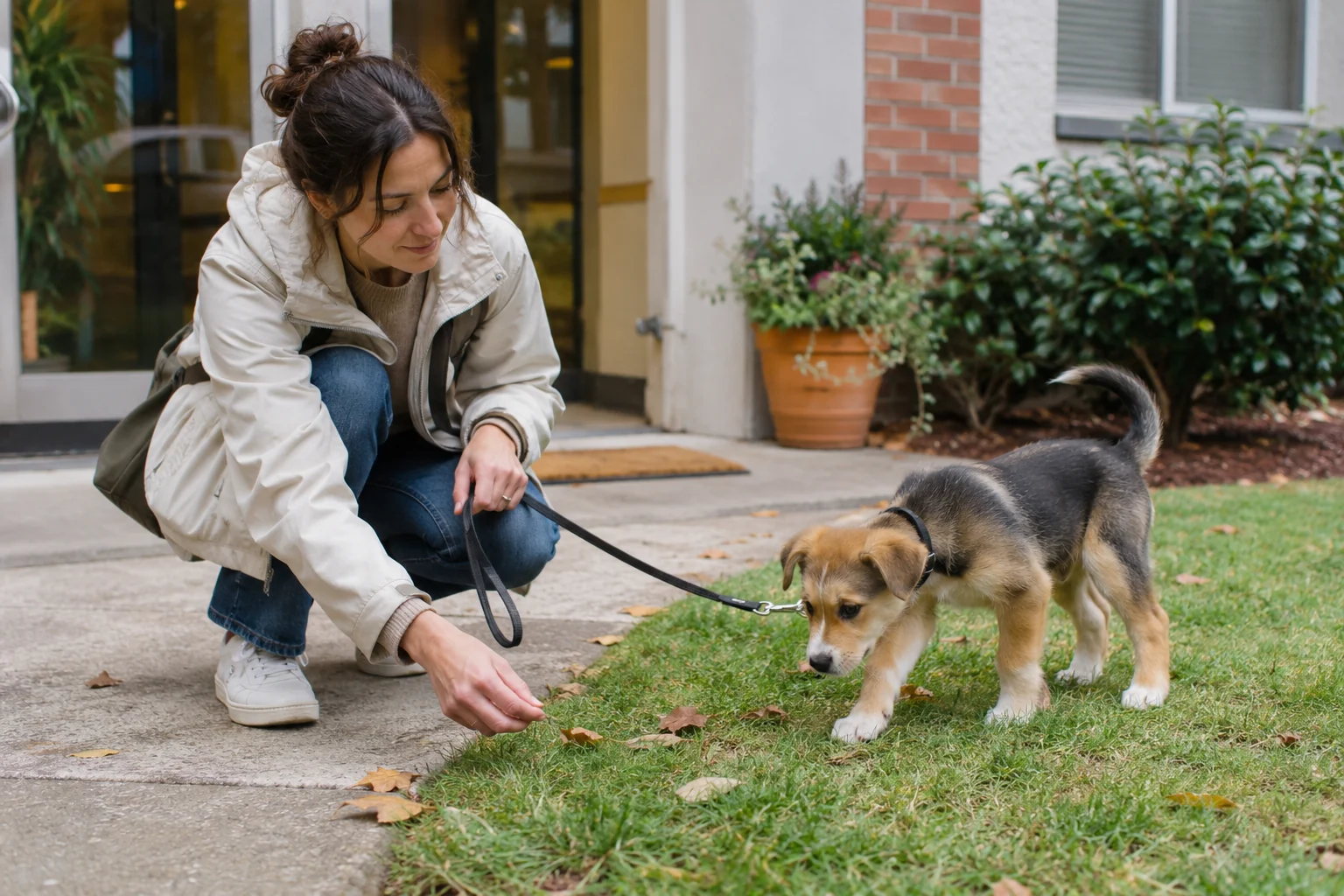
Crate, playpen or puppy-proofed room while you work?
Choose a space your puppy has already learned to find comfortable. A crate can be useful for rest and short, positive practice. It is not a way to make a young puppy wait through a workday without care. An exercise pen or puppy-proofed room gives more room to move and may be a better fit for longer managed periods, but neither creates human contact or removes the need for breaks.
Make the area boring in the best sense: water, a comfortable place to rest, and only items you know are safe for this puppy without supervision. Check cords, loose objects and anything she could pull down. Introduce the space while you are home and see how she behaves before using it for a real absence. Our playpen versus crate guide helps you think through the setup.
Do not choose the space by cleanup alone. If she needs a toilet opportunity before you return, the care plan must address that need. A larger pen is useful for comfort, but it does not replace a person.
How do you help her get used to short absences?
Start well before your first full office day if you can. Give her a comfortable, puppy-safe place while you are still home. Step away briefly, return calmly, and notice whether she can settle. Build only at a pace she handles. AKC describes this gradual introduction, and RSPCA advises shortening the next attempt if the dog becomes distressed.
Practice and workday care solve different problems. Ten quiet minutes alone do not mean she is ready for your commute plus a shift. You still need appropriate visits and a plan if she cannot cope. If you want a structured, age-specific routine to take further, the 3-to-6 Month Puppy Plan includes alone-time and workweek planning pages.
What if she barks while you are gone or the neighbors complain?
Try to find out what happens after the door shuts, not just what you hear when you return. A camera recording of an ordinary absence can show whether your puppy rests, briefly vocalizes, paces, scratches at an exit, or remains unsettled. RSPCA recommends video because some signs of distress are otherwise easy to miss. One quiet clip cannot rule out distress later in the day.
If a neighbor or HOA has contacted you, thank them for the information and ask when the noise occurred. Compare that time with the recording and your care visits. Treat ongoing vocalizing, pacing, escape attempts or other signs of distress as information about your puppy, not as defiance to punish. Speak with your veterinarian, who can help rule out medical contributors and refer you to a qualified behavior professional when needed.
Free one-page observation card
Not sure what happens after you leave?
Watch one ordinary departure and jot down what you actually see. The card gives you a clear note to use when deciding what to change or what to ask your vet. A short clip will not show the whole day, but it gives you one clear place to start.
Questions working puppy owners ask
Is one lunchtime visit enough?
It depends on your puppy and the length of both gaps. Count the hours before and after the visit, then discuss her individual needs with your veterinarian. A young puppy may need more than one care opportunity.
Can I leave her in a crate all day?
Do not use a crate as a substitute for workday care. A suitable pen or room may offer more space, but neither replaces toileting, feeding when due, and contact with a person.
What if I work from home but cannot leave meetings?
Being home is helpful, but it is not the same as being available. Arrange a safe space and breaks around calls you cannot interrupt, or have another caregiver cover them.
Would getting a second dog keep her company?
Do not count on it. Dogs Trust notes that another dog may not address the absence of the owner and both dogs still need care and toilet opportunities.
This article draws on linked guidance from the American Kennel Club, Dogs Trust and RSPCA. LoveMyPuppy sells the 3-to-6 Month Puppy Plan mentioned above. The guidance here is general education, not a diagnosis or individualized veterinary plan.