

Short answer: Puppy combination vaccines usually start at 6 to 8 weeks, with repeat doses through at least 16 weeks.
Your vet sets the dates, including leptospirosis and rabies. Rabies timing follows the vaccine label and local law.
| Stage | What to confirm |
|---|---|
| First appointment | Bring previous records. Confirm which combination vaccine doses are documented. |
| Puppy combination series | Doses usually repeat every 2 to 4 weeks. The final puppy dose must be at least 16 weeks. |
| Higher exposure risk | Your vet may extend the series to 18 to 20 weeks. |
| Leptospirosis and rabies | Confirm the separate starting ages, doses and local rabies requirements with your clinic. |
| After the puppy series | Ask the clinic to record each next due date. Booster intervals differ by vaccine. |
Based on AAHA vaccination guidance, updated in 2024. This chart explains decisions; it does not prescribe dates.
Just home from her shots? Watch her tonight.
The breeder’s paper says “first shots given.” The vet wants her back in three weeks. Your neighbor says carry her everywhere until she’s done. Your partner wants to try the dog park on Saturday.
Meanwhile, the house is still working out potty trips, bedtime and who fed her. You’ve opened four vaccine charts tonight, and none of them match. Those charts agree on the big parts, and the rest is your vet’s call. Start with the dates your vet gives you.
A puppy shot schedule records vaccines and follow-up doses. Missed appointments can leave gaps in protection. Call your clinic promptly if a dose is overdue.
We sell a printable puppy routine kit and link to it below. Our check-in tool is free.
✓ Built on guidance from AAHA, the American Veterinary Society of Animal Behavior, Banfield, PetMD and the AKC.
What is the puppy shot schedule by age?
Combination doses continue through at least 16 weeks. Rabies has its own timing, based on the product and local law.
The American Animal Hospital Association writes the vaccine guidelines many US vets follow. For puppies 16 weeks or younger, AAHA calls for at least 3 combination doses between 6 and 16 weeks. They go 2 to 4 weeks apart.
In real life, that’s at least three vet visits spread over a couple of months. Write each date down the day you book it.
How many sets of puppy shots does a puppy need?
At least three sets of the combination shot. That’s AAHA’s minimum for a puppy 16 weeks or younger. Puppies who start early may need more, because boosters continue until at least 16 weeks old.
Protection builds with each booster, Banfield explains. Most puppies count as fully vaccinated around 16 to 18 weeks. Their immune system needs another week or two after the last shot.
When do puppies get their first shots?
Most start around 6 to 8 weeks of age, according to PetMD. She may have had that first shot before she came home. Ask the breeder or shelter for the exact date and vaccine name, so your vet can time the next one.
Which shots do puppies need, core or lifestyle?
Core vaccines are “recommended for all dogs irrespective of lifestyle,” in AAHA’s words, unless there’s a medical reason not to. Lifestyle shots, also called noncore, depend on location, travel, daycare, boarding and how much she’s around other dogs.
“Your veterinarian can help create a vaccine plan tailored to your dog’s lifestyle.”
Dr. Monica Tarantino, DVM, writing for PetMD
| Vaccine | Protects against | Core or lifestyle | Puppy timing |
|---|---|---|---|
| DHPP, also called DA2PP or DAPP | Distemper, adenovirus (hepatitis), parvovirus, parainfluenza | Core | Every 2 to 4 weeks, starting around 6 to 8 weeks and continuing through at least 16 weeks |
| Rabies | Rabies | Core, required by law in most states | Often 14 to 16 weeks, as local law requires |
| Leptospirosis | Bacteria spread in the urine of infected animals | Core under AAHA guidance, updated in 2024 | Two doses, 2 to 4 weeks apart, from 12 weeks |
| Bordetella | A cause of kennel cough | Lifestyle | Varies; nasal, oral and injectable forms exist |
| Lyme | A tick-borne bacterial disease | Lifestyle | Two doses a few weeks apart |
DHPP: the parvo and distemper shot
Each DHPP shot, also called DA2PP, includes parvo, so every DHPP in her series is a parvo dose.
AAHA’s minimum of three combination doses means at least three parvo doses. Parvo affects all dogs, but unvaccinated dogs and puppies under four months are most at risk, the AKC notes. Extreme dehydration from parvo can kill a dog within 48 to 72 hours. Distemper has no cure.
At what age do puppies get the rabies shot?
AAHA’s guidance is “as required by law.”
Your vet schedules rabies vaccination according to local law and the vaccine label. It may coincide with another appointment.
Leptospirosis
Lepto is a bacterial disease that can cause severe kidney or liver failure, PetMD explains. Dogs can catch it from a puddle where an infected animal urinated. People can catch it too.
Bordetella, the kennel cough vaccine
Group classes, daycare and boarding often ask for proof of this one, the AKC notes. AAHA lists a single nasal dose for dogs at risk of exposure, then yearly boosters.
Lyme
Lyme is common in parts of the Northeast, northern Midwest and Pacific coast, PetMD reports. The vaccine is advised there, and for dogs who travel there.
Canine influenza
Dog flu in the US comes from two strains, H3N2 and H3N8. It’s highly contagious and causes a cough, nasal discharge and a low-grade fever. The vaccine is typically recommended for dogs who go to daycare, boarding, groomers or anyplace with other dogs, PetMD notes.
How can you make shot days easier on your puppy?
Every shot visit starts with a gentle exam to check she’s healthy enough for vaccines, per Banfield. The team also reviews her history and lifestyle.
Before the appointment: Bring previous vaccine records and tell the clinic about recent illness or reactions. Ask where to wait safely.
Stay with your puppy while waiting. Never leave her unattended in a parked car.
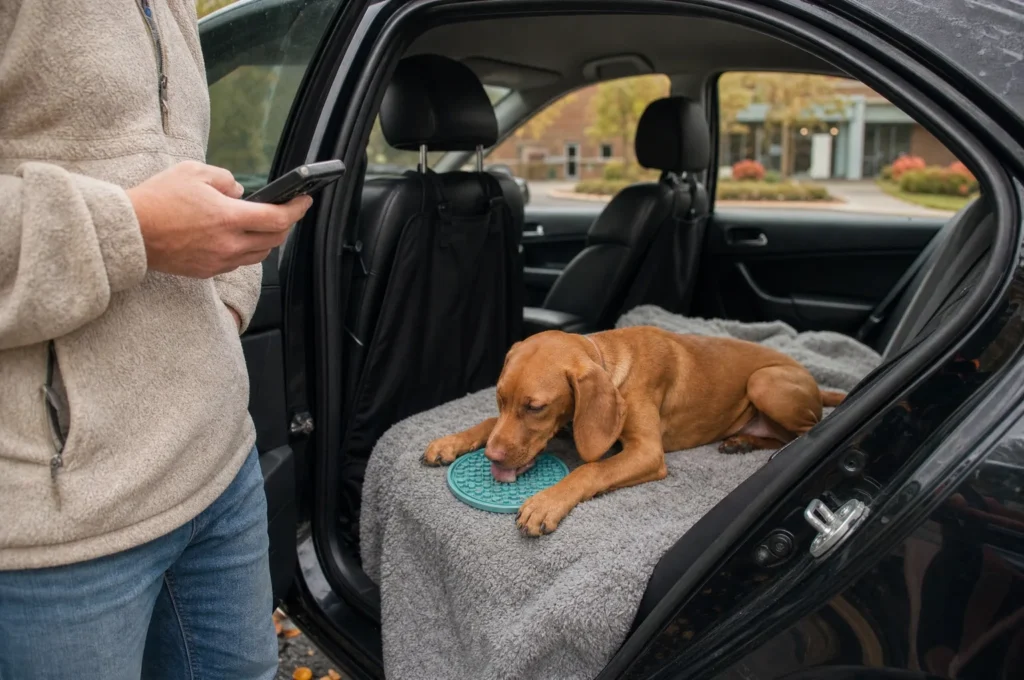
The American Veterinary Society of Animal Behavior suggests taking puppies on as many car trips as possible. It adds that crate-trained puppies are less stressed when confined for car travel. Our crate training guide helps her like the crate first.
Why don’t the puppy shot charts match?
AAHA updated its guidance in 2024 to make leptospirosis a core vaccine for all dogs. Older charts may still classify it differently.
Banfield’s schedule still lists it with lifestyle shots, and so does the AKC’s table.
Is 16 weeks the last puppy shot? PetMD has boosters going until at least 16 weeks. Some breeds and puppies in high-risk areas may benefit from a last dose around 18 to 20 weeks. The AKC’s table lists DHPP and rabies at 16 to 18 weeks.
Ask your vet which vaccines are due, when the next doses fall, and which local exposure risks matter.
When can puppies go outside and meet other dogs after their shots?
Skip dog parks until her series is done, but careful socializing can start much sooner.
Until her series is done, Banfield says it’s safest to avoid public places like dog parks or pet stores. Unvaccinated dogs may be there. Instead, it suggests playdates with healthy, vaccinated dogs you know.
Veterinary behaviorists push for earlier contact. The AVSAB names the first three months as the most important time for socialization. It calls socializing before full vaccination the standard of care. Behavior problems, it adds, are the top cause of death for dogs under three years old.
In general, puppies can start socialization classes as early as 7 to 8 weeks, in the AVSAB’s view. She should have at least one set of vaccines 7 or more days before the first class. She also needs a first deworming.
Dog parks can wait. Ask your vet about local disease risk before choosing a well-run puppy class.
Arrange controlled introductions with healthy, vaccinated dogs your vet considers suitable.
Can she go in the yard or on walks before her shots are done?
None of the pages we read sets a rule for your own yard, so ask your vet about yours. Beyond dog parks, the AVSAB says to avoid other areas that aren’t sanitized. The same goes for spots busy with dogs of unknown vaccine or disease status. Where possible, it wants classes on surfaces that are easily cleaned and disinfected, such as indoors.
To get her out while you wait for the series to finish, PetMD suggests a dog stroller or backpack carrier. It keeps her off the ground.
Tip: When you call a puppy class, ask what shots they require and how they clean the floor.
What side effects are normal after puppy shots?
Most puppies handle vaccines well, Banfield notes. A small, firm bump at the injection site usually fades within a few days. A slight fever is also on its list of temporary signs.
Anaphylaxis can start within minutes to hours of the shot, according to PetMD. Signs include vomiting, diarrhea, swelling around the muzzle, face or neck, coughing, trouble breathing, itchy skin and hives. Get veterinary care immediately if you see any.
Had a reaction before? Tell your vet before her next shot.
My puppy missed a shot. Do we start over?
Call the clinic with the vaccine name and last dose date. Your vet decides whether to continue or restart a series. The answer depends on the vaccine and delay.
What shots does she need after the puppy series?
Boosters come next, typically every one to three years, per Banfield. The AKC’s first-year table repeats DHPP and rabies at 12 to 16 months.
PetMD’s adult schedule lists leptospirosis, Lyme and canine influenza as yearly shots. Bordetella is sometimes given every six months. Rabies may be yearly or every three years, depending on state law and risk.
Can a titer test replace her boosters?
Vets disagree about yearly shots for adult dogs, the AKC explains. Some believe too many vaccinations pose health risks. Others say yearly shots prevent dangerous diseases such as distemper.
A titer measures antibodies to a specific infection. It cannot replace every vaccine or certify protection against every disease. Ask your vet when testing helps. Rabies requirements still depend on local law.
How much do puppy shots cost?
Costs vary by location and by which vaccines your puppy needs, per Banfield, so ask your clinic for a quote. City vets generally charge more than small-town vets, the AKC notes. The first year also costs more than adulthood.
Money tight? Many shelters and humane societies run low-cost or even free vaccine clinics, PetMD reports. Some pet insurance wellness plans cover some or all vaccines. Our guide on whether pet insurance is worth it for a puppy walks through that choice.
When should you call the vet?
These moments shouldn’t wait.
- Any emergency sign after a shot. Call right away. Your vet may send you to an emergency hospital.
- Vomiting or diarrhea in an unvaccinated or partly vaccinated puppy. Parvo moves fast in young puppies, the AKC warns, and prompt care is crucial.
- A puppy who shows fear. Owners of fearful puppies should seek veterinary guidance, in the AVSAB’s words.
What should you do this week?
- Today: find her breeder or shelter papers and bring them to her next visit.
- Tomorrow: book the next vet visit, and ask which lifestyle shots fit your area.
- Before the visit: pack a small vet bag with treats, a lick mat, a towel and her records.
- On the fridge: write the shot dates beside her puppy potty training schedule.
Puppy shot schedule FAQ
What is the difference between DHPP and DAPP?
They’re essentially the same combination vaccine, Banfield says. Both cover distemper, adenovirus (hepatitis), parvovirus and parainfluenza. PetMD adds that it’s sometimes called DHLPP when leptospirosis is included.
Is it too late to vaccinate an older puppy or dog?
No. It’s never too late to vaccinate a dog, even an older one, PetMD says. For dogs over 16 weeks, AAHA lists two doses of the combination vaccine, 2 to 4 weeks apart. Your vet sets her plan.
What if my puppy was never vaccinated?
She’s open to preventable diseases that can be expensive to treat and, in some cases, fatal, PetMD warns. Some, like rabies and leptospirosis, can pass to people. With an unknown history, AAHA judges the benefits of vaccinating to “far outweigh the risks.” Book a vet visit soon.
How do I keep track of my puppy's vaccine records?
Ask your clinic for her official vaccine record and next due dates. Save a copy on your phone. Check that boarding providers accept the clinic documentation before booking.
Can I give my puppy vaccines at home?
It’s safest to have a veterinary professional do it, Banfield says. They store and handle vaccines properly and watch for rare reactions. They also keep her official medical record.
What shots does my puppy need for daycare or the groomer?
Most facilities ask for proof of DHPP and rabies, plus Bordetella, per Banfield. Some also ask for canine influenza or leptospirosis, depending on your area. Check before her first visit.
Is there a heartworm shot for puppies?
Heartworm prevention is medication, not a vaccine. The American Heartworm Society recommends starting as the label allows, no later than 8 weeks. Ask your vet which product fits her age and weight.
What is the difference between a 1-year and a 3-year rabies shot?
Both protect against rabies, Banfield explains. The 3-year version lasts longer once your dog has had her first-year booster. Your vet picks the right one based on local law and her vaccine history.
Last updated: October 24, 2026. We checked current search results and reviewed the guidance linked in this article. This is general education, not an individual veterinary assessment.