

Short answer: Offer a bedtime potty trip, keep her sleeping area nearby, and respond when she wakes or becomes restless.
Keep overnight trips quiet and brief. Adjust planned breaks from her actual pattern, rather than treating age as a guaranteed holding time.
It’s 2:14 a.m. She’s whimpering in the crate, and you’re doing the math. Did she go at eleven, or was that last night? If you get up, does she learn that crying works? If you don’t, you’re hosing out a crate before coffee.
Crate training works because dogs don’t want to soil where they sleep. Preventive Vet says crate accidents can cause a big setback in house training.
This is fixable, and nobody in your house is failing. Puppy toilet training at night means planning overnight breaks and responding to your puppy’s signals. The same principles apply wherever you live.
We sell the puppy planning kit linked below. Our potty timer is a free planning tool.
✓ Built on guidance from the AKC, Preventive Vet, VCA Animal Hospitals and Humane World.
She’s crying in the crate right now? Do this.
- Check her needs promptly and calmly. Do not postpone a needed potty trip until she stops crying.
- Take her to her spot. Stand still. Give her up to 5 minutes.
- If she goes, praise her quietly. Either way, she goes straight back in, with dim lighting.
- Crying or panting needs a calm check of toileting, temperature and comfort. Persistent distress needs veterinary or training support.
How do you potty train a puppy at night?
Empty her early, crate her close, and make every night trip dull.
What you need by the door
Preventive Vet lists a flashlight, a collar or harness, a leash and poop bags. Add slip-on shoes and a towel.
1. Feed her last meal three to four hours before bed
Preventive Vet’s trainer, Cathy Madson, suggests dinner three to four hours before bedtime. She can digest and poop outside first. Keep the last hour calm: a chew toy, then an easy walk into the crate.
2. Decide on water, then stick to it
Experts split here. For a crate-wetting puppy, Ask AKC suggests taking the water bowl away several hours before bed. Madson prefers water at all times, removed an hour before bed only after a vet check.
If her crate stays dry, we’d leave the water down. If it’s wet, ask your vet about a cutoff. Either way, go out about 10 minutes after she drinks.
3. The last person up takes her out
It’s the last-chance potty break, even if she went an hour ago. You want her running on empty when the door closes.
4. Put the crate beside your bed
Humane World puts a puppy’s crate in your bedroom or a nearby hallway at first, so you hear her whine.
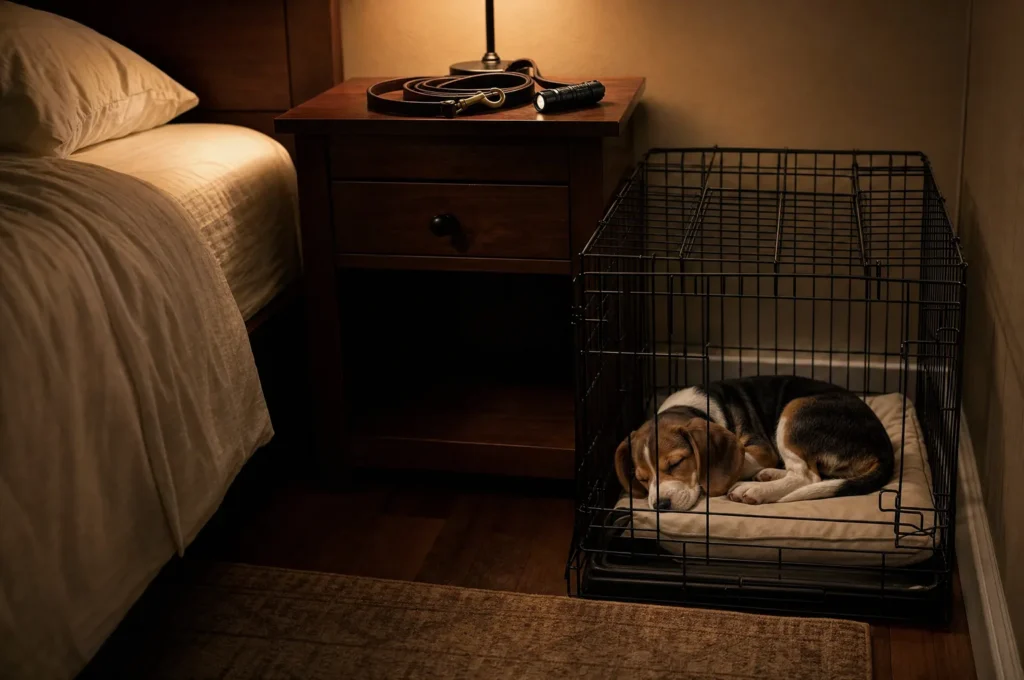
Without a crate, use a suitable puppy-proof pen or safe sleeping area. Never leave her tethered while you sleep. Our first-night crate guidance explains gradual introductions.
5. When she stirs, go, and keep it boring
Restlessness usually comes before the whining. If you can, pick her up and carry her outside, because walking wakes her up. At her spot, the AKC suggests a simple cue like “Go potty”, said once as she starts. Keep interaction quiet. Use enough light to walk safely.
If nothing happens, return to close supervision or a comfortable resting area. Try again shortly if she remains restless. Repeated straining or difficulty urinating needs urgent veterinary advice.
“Potty breaks should always be business before pleasure!”
Cathy Madson, MA, CPDT-KA, Preventive Vet
Tip: Use a headlamp pointed at the ground. Fumbling for lights and gear makes her wait, and she may go inside, Preventive Vet warns.
6. Morning trip before anything else
The moment she wakes, out she goes. Our puppy potty schedule covers the daytime side.
What about rainy or freezing nights?
Use a safe, sheltered spot when conditions allow. During dangerous weather, use a temporary indoor backup rather than risking exposure.
How do you do night trips in an apartment?
The elevator adds minutes her bladder doesn’t have, so leave early and hold her the whole way down. Madson’s apartment guide warns that accidents can happen in the hall or elevator. Keep enzyme cleaner by the leash, for the neighbors and your deposit. A fan, sound machine or white noise app muffles noises that wake her, she adds. Daytime tips are in our potty guide.
Should I wake my puppy up to pee at night, or wait for her?
Plan a break before her usual accident or waking time. Respond promptly if she wakes or becomes restless. A dry, comfortable puppy may sleep longer; adjust from her pattern and veterinary advice.
Preventive Vet is for the alarm. If she wakes at 1:00, they say to set an alarm for 12:45. After a few days, push it 30 to 60 minutes later. That way, she’s out before the barking starts.
Crying can mean several things. Check her needs calmly instead of assuming she is testing you. Persistent distress needs help from your vet or a qualified reward-based trainer.
Use her recent pattern to plan breaks. An alarm before a repeated accident can help. Do not delay a needed trip while waiting for silence.
| What you notice | What to do |
|---|---|
| Restlessness or crying after sleep | Offer a quiet potty trip promptly. |
| Distress immediately after confinement | Check toileting and comfort needs. Stay nearby and reduce confinement difficulty. |
| Continued crying after a trip | Check temperature, discomfort and illness. Do not diagnose the cause from the sound alone. |
For persistent distress, our crate anxiety guide explains a gentler approach.
How often should you take a puppy out at night?
Young puppies may need several overnight breaks. Keep a simple record of waking, successful trips and accidents.
Arrange an earlier break if she repeatedly wakes wet. A dry, comfortable puppy may gradually manage longer stretches.
Age-based rules are rough planning aids. Illness, drinking, activity and individual development can change what she needs.
Why does my puppy wake up to pee every 2 hours?
At 8 to 10 weeks, that’s normal. The AKC notes bladder control is weakest around 8 weeks. Check dinner timing, late drinks and crate size. If she’s past 12 weeks and still up every two hours, or peeing often by day, ask your vet. A urinary tract infection is one cause, Preventive Vet says.
What does the first week of nights look like?
Broken sleep, one or two trips a night, and some crying. You’re not doing it wrong.
Preventive Vet followed their office puppy, Finnegan. In his first week home, he needed potty breaks one to two times a night. On their video, he took about four minutes to settle after a trip. Their trainer says distress barking is common in puppies still new to the home.
If an accident happens, above all, don’t punish it. To keep the 2 a.m. trip from becoming a habit, use the alarm stretch in the wake-or-wait section.
Why does my puppy pee in her crate at night?
The break may have come too late. Crate fit, distress and medical problems can also contribute.
A wet crate is information, not misbehavior. Offer more frequent breaks and check that she can stand, turn and lie comfortably.
- Long gaps. Bring the next break forward when accidents or restlessness show the interval is too long.
- Too big. The AKC wants room to stand, turn and lie down, and no spare corner. Move the divider in.
- Pooped in the crate. Move dinner to three to four hours before bed. Take her back out right away in case she still needs to go.
- A rescue puppy. The AKC’s Dr. Mary Burch says crate soiling often shows up in dogs confined for long stretches. Use shorter stretches.
What if she pees in the crate without a sound?
Some puppies skip the whine. The urge usually starts as restlessness, and with the crate beside your bed you’ll hear the rustle. If you still find it wet, set the alarm to wake you before she does. A camera with motion alerts helps too, Preventive Vet notes.
Keep a spare pad and towels by the crate. Soak the tray with enzyme cleaner and let it sit. The AKC says lingering odors draw her back. Our enzyme cleaner guide covers the label.
When can a puppy hold it all night?
Often around 16 to 20 weeks, sometimes later. Wait for a run of dry nights before you drop the trip.
Preventive Vet says a full night without a potty break is usually seen around 16 to 20 weeks.
Can an 8 week old puppy go all night without peeing?
Expect an eight-week-old puppy to need overnight help. Offer a break when she wakes and plan from her recent pattern.
Can a 12 week old puppy sleep through the night?
Some twelve-week-old puppies sleep longer; others still need breaks. Extend intervals gradually only while she stays dry and comfortable. Our puppy sleep guide covers total sleep needs.
What mistakes keep a puppy peeing at night?
A skipped last trip, sending her out alone, and scolding the wet crate.
- Skipping the last trip. She went at nine, so you skip eleven. That’s two extra hours.
- Sending her out alone. VCA says puppies left outside alone get distracted and don’t go until they’re back indoors. Go with her.
- Scolding the wet crate. VCA says punishing a natural act can teach her never to toilet near a person. Humane World adds that crate punishment can make her fear it. Clean up and fix the schedule.
Why does my puppy wake up at 5 a.m. to pee?
Usually a full bladder, or early light waking her. Treat it like 2 a.m.: out, straight back, room dark, no breakfast. A blanket over the crate blocks early light, if she can’t pull it in. If it happens daily, move the last trip later for a week.
Before bedtime: Agree who handles each puppy trip. Keep the last potty time visible to anyone helping overnight.
If one person handles every trip, prepare the leash, shoes and light before bed to reduce delays.
The sheet works without a newborn too. Write down who went out and when.
When should you call the vet or a trainer about night accidents?
A wet crate on a tight routine, a dry puppy who suddenly isn’t, or lots of peeing by day.
Madson says to rule out medical causes when accidents keep coming. Dr. Burch says dogs hard to house train despite consistent training should get a veterinary evaluation. VCA adds that a trained dog who starts soiling needs a vet.
After that, the AKC suggests a trainer or behaviorist. That’s also the call for nightly crate panic. Puppies with diabetes or kidney disease need free access to water, Madson notes. Never cut water on a puppy who seems unwell.
What if she has diarrhea at night?
Give her prompt toilet access and contact your vet about diarrhea in a young puppy. Vomiting, lethargy, blood or refusing food need urgent veterinary advice. Do not wait two days when she seems unwell.
What should you do this week?
Tonight, prepare the route and record each trip. Adjust the next night from what happened, rather than a fixed deadline.
Night potty training FAQ
Should I wait ten minutes after my puppy wakes?
No. Offer a potty trip promptly after waking. A memorable rule should not override restlessness or other signs she needs to go.
Is it OK to crate a puppy overnight?
A properly introduced, correctly sized crate can help. Keep it nearby and provide needed potty breaks. Do not leave a distressed puppy to panic.
Should I use a puppy pad at night instead of going outside?
Only if you have to. The AKC’s Dr. Burch says pads can be tricky, because they teach two options. Madson kept her puppy’s bedroom crate inside a playpen with pads, then removed both as he matured. If you use one, keep it outside the crate. Our puppy pads guide covers moving from pads to the yard.
Do potty bells help at night?
They can. VCA says you can teach a puppy to ring a door bell, though some ring just to play. At night, treat every ring as a normal, boring trip.
Editorial review: Updated October 23, 2026 after reviewing search results and relevant source guidance. This is an editorial guide, not a product test or individualized professional advice.
Sources
- American Kennel Club: How to Potty Train Your Puppy (hours by age, potty cue)
- Ask AKC: Dog Pees in Crate (months plus one, dividers)
- Humane World: Crate Training 101 (night crating, whining)
- Preventive Vet: Crate Training Your Puppy at Night (barking, alarms)
- VCA: House Training for Puppies and Dogs (overnight outings, bells)