

LoveMyPuppy sells washer-cleaner tablets. The seal-cleaning steps here are based on appliance guidance; a drum-cleaning tablet has a separate role.
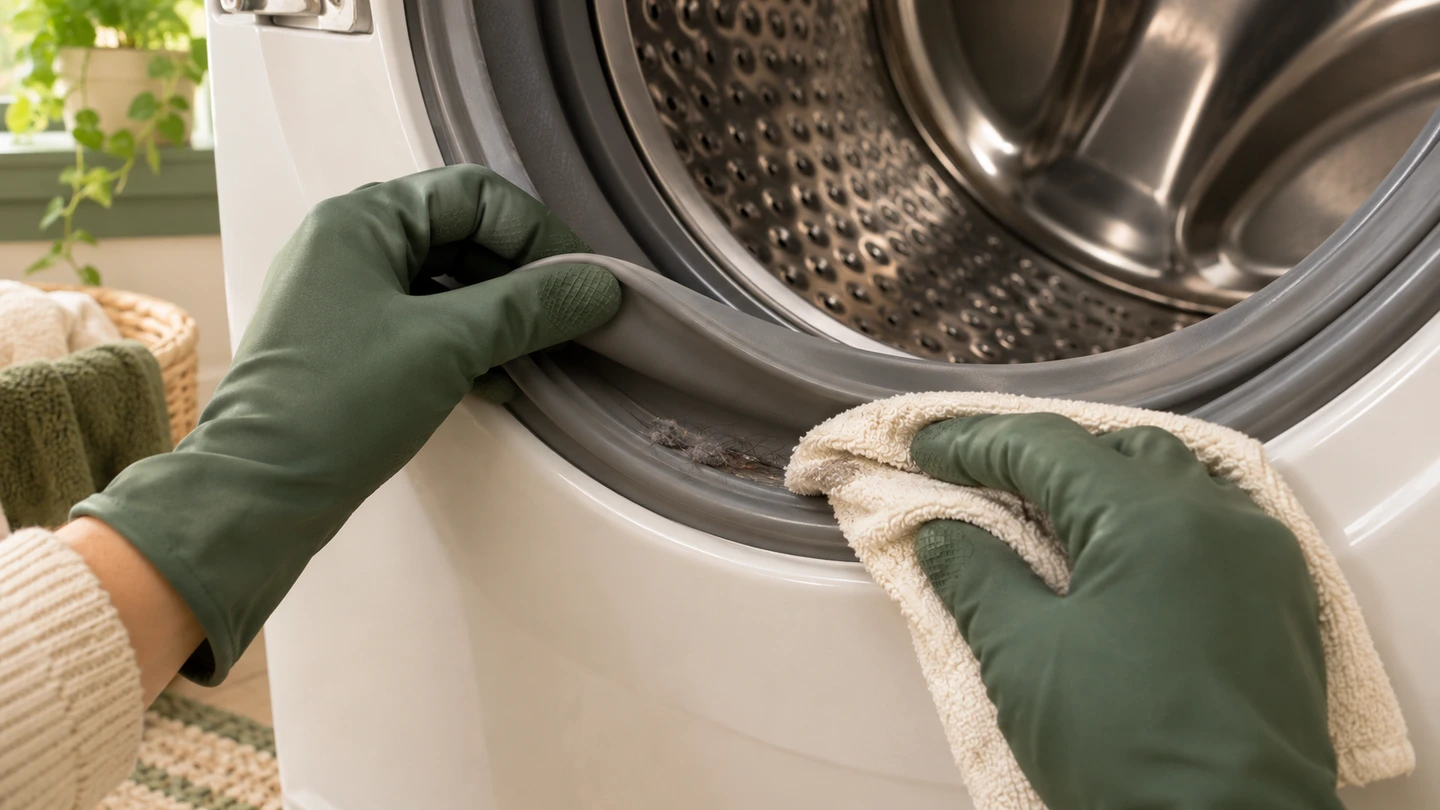
The drum looks clean, but the lower rubber fold holds a little hair and damp sludge.
You do not need to start with the strongest bottle in the cupboard. First find out what wipes away and whether the seal is intact.
Before you start, check the model’s cleaning instructions
This guide covers the visible door gasket on a front-loading washer. A top loader has a different design.
Finish the wash cycle and empty the machine. Let hot surfaces and water cool, then follow the manual’s power-off instructions.
Gather a soft cloth, a dry towel and any protective gloves the cleaning product requires. Have the model’s approved cleaning instructions nearby.
Use a light to inspect the lower fold. Gently move only the flexible lip intended for access.
If the rubber is torn, loose or leaking, contact appliance support. Cleaning cannot restore a damaged seal.
Find the care instructions for your exact model: Whirlpool manuals, LG manuals or Samsung manuals.
Enter the model number from the appliance label, then look under cleaning, maintenance or troubleshooting.
Clean the accessible gasket in five steps
1. Remove loose hair, lint and trapped items
Pick up accessible loose debris before applying a cleaner. Check for small items caught in the fold.
Do not use a knife, metal scraper or sharp tool. Avoid pushing debris farther into openings.
2. Wipe the exposed surface and fold
Use a soft damp cloth with the method permitted by your manual. Work around the accessible rubber without pulling it out of position.
Whirlpool’s gasket guidance separates loose-debris removal from cleaning tougher residue.
Refold or rinse the cloth as it becomes dirty. Otherwise, you may spread the same residue around the seal.
3. Use the approved treatment for remaining marks
If ordinary wiping does not remove the buildup, check your model’s stain or mildew instructions.
Use only the stated product, dilution and contact time. Do not copy a stronger mixture from an unrelated washer guide.
Never mix bleach with vinegar, ammonia or another cleaning product. If you have already applied something, do not layer another chemical over it.
4. Remove cleaner residue as directed
Follow the instructions for a fresh-water wipe, rinse or later empty cycle. The required finish depends on the product and machine.
Do not leave concentrated cleaner sitting in the rubber fold overnight unless the manufacturer specifically instructs that method.
5. Dry the accessible rubber
Use a clean towel to dry the visible fold and door area. Check that no cloth or debris remains before closing.
If your manual recommends leaving the door ajar, control access. Children and pets must not be able to climb inside.
What if the black marks do not disappear?
Color alone cannot tell you exactly what a mark is. A dark patch may look similar before and after gentle cleaning.
Note what changes: does residue transfer to the cloth, does the smell remain, and is the rubber damaged?
| What you find | Next step |
|---|---|
| Loose hair or wipeable film | Continue the approved gentle cleaning and drying method |
| A mark remains but the surface is otherwise clean | Ask the manufacturer about the mark before stronger treatment |
| Recurring residue or persistent odor | Check the wider maintenance routine and request advice if it continues |
| Torn rubber, leakage or a loose retaining part | Contact appliance support rather than continuing to scrub |
Do not remove the retaining ring or peel the whole gasket away. That turns a surface-cleaning job into a repair.
Where a washer-cleaner tablet fits
Hand-cleaning the gasket and running a drum-cleaning cycle are related tasks, but they are not interchangeable.
LG’s odor guidance lists the dispenser, gasket, drain filter and tub-clean cycle as separate checks.
For the separate monthly empty-drum step, LoveMyPuppy offers pre-measured tablets in 12- or 24-tablet packs.
Place the tablet only where its label directs. Do not rub it onto the rubber or dissolve it into a homemade gasket spray.
Keep the next pet-bedding load easier to clean up
Remove visible loose fur from bedding before washing. Check the gasket fold afterward and collect accessible strands.
Unload wet items promptly. Follow the model’s directions for drying the seal and maintaining the dispenser.
Review detergent dosing if film keeps returning. More detergent is not automatically better for heavily used pet bedding.
Our dog-bed washing guide covers the fabric side. Our washer-cleaning guide covers the wider appliance routine.
Common questions
What can I use to clean the rubber seal?
Use the method and cleaning product approved for your model, with a soft cloth. Follow its dilution, contact-time and rinse instructions.
Can I remove the rubber seal to clean behind it?
Do not remove it as a routine cleaning shortcut. Ask the manufacturer or a qualified technician about inaccessible areas.
Can I use vinegar on the gasket?
Only if your model’s instructions allow it. Do not combine it with bleach or apply it over another cleaner.
Will a washing machine tablet clean all the seal folds?
Do not rely on it for that job. Remove accessible debris and clean the gasket separately according to the manual.
How often should I wipe the seal?
Follow your model’s maintenance guidance and remove visible debris promptly. LG advises wiping the door and gasket dry at the end of each wash day.
Sources and product details
- Whirlpool front-load gasket-cleaning guidance
- LG front-load maintenance
- LG odor and buildup checks
- LoveMyPuppy tablet directions
- Whirlpool model manuals
- LG model manuals
- Samsung model manuals
Prepared from the linked product information and appliance instructions. Illustrations show the task; they are not cleaning-test results.
Product details and manufacturer guidance checked November 6, 2026. Formulas and directions can change; use the current label and your model’s manual.