

QUICK ANSWER
For food-related demand barking, first check that your puppy’s feeding needs are met. Then make meal preparation easier and reward a brief, achievable calm response. Do not turn food or silence into a prolonged standoff.
On this page
- Is this anticipation, hunger, or something else?
- Notice what the barking has been achieving
- Make the next meal easier
- When the barking is at your dinner table
- Check the handoff when more than one person feeds
- What if the barking gets worse when ignored?
- When barking becomes the first step toward a treat
- What counts as useful progress?
The cupboard opens. Your puppy starts barking. By the time you find the scoop, you are both wound up.
Start with the short stretch between preparing food and serving it.
LoveMyPuppy sells the First 14 Days Kit mentioned below. Its role here is household organization, not a promised cure for barking.
Is this anticipation, hunger, or something else?
Look at the whole situation. Does barking begin when the bowl appears? Does it also happen around your food after the puppy has eaten?
Check the feeding guidance you received from your veterinarian, breeder, or rescue. Confirm that meals have actually happened, particularly when several people share care.
Do not diagnose demand barking from volume alone. Sudden appetite changes, discomfort, vomiting, or other illness signs deserve veterinary advice.
Also distinguish food anticipation from guarding. Freezing, growling, or snapping when someone approaches food calls for space and qualified help. Do not reach into the bowl to test the puppy.
Notice what the barking has been achieving
If each bark makes food preparation speed up, the sequence can become part of the meal. If someone repeatedly hands over table scraps, the puppy has another reason to try again.
Best Friends Animal Society recommends rewarding quiet during demand situations. Its guidance starts with a very short quiet interval, then builds gradually.
You do not need to demand a long stay from a puppy who has never learned one. Make the first useful response easy enough to recognize and reward.
Make the next meal easier
Prepare before excitement builds
Have the equipment ready before bringing your puppy into the busiest part of the kitchen. Keep food safely out of reach.
If a helper is available, ask them to supervise the puppy somewhere comfortable while you prepare. This reduces the time spent rehearsing the same noisy sequence.
If you are cooking alone
Make the setup easier before opening the cupboard. Prepare the bowl and scoop while your puppy is comfortable and supervised nearby. Avoid carrying hot pans while trying to run a training exercise.
For example, let the puppy use an already familiar resting spot while you portion the meal. Reward a calm moment before excitement builds. Then serve the planned food without adding a long waiting test.
If the puppy cannot settle there yet, practice the resting spot at another time. Tonight’s job is a manageable meal, not proving they can wait through a complicated recipe.
Practice the waiting spot separately
A mat beside the kitchen can become a useful resting place. Introduce it during a calm moment, away from the pressure of a nearly ready meal.
Reward voluntary calm behavior there. Keep the location away from hot pans, falling food, and people carrying plates.
Do not shut the puppy behind a barrier that already causes distress just to make the kitchen quiet.
Keep the expectation small
Once your puppy is comfortable, notice a brief quiet pause or an already learned calm behavior. Reward that response promptly.
If the attempt becomes a struggle, simplify the setup. Do not keep lifting and lowering the bowl until frustration escalates.
Serve the planned meal. At the next practice, shorten preparation or use an easier setting rather than increasing the waiting time.
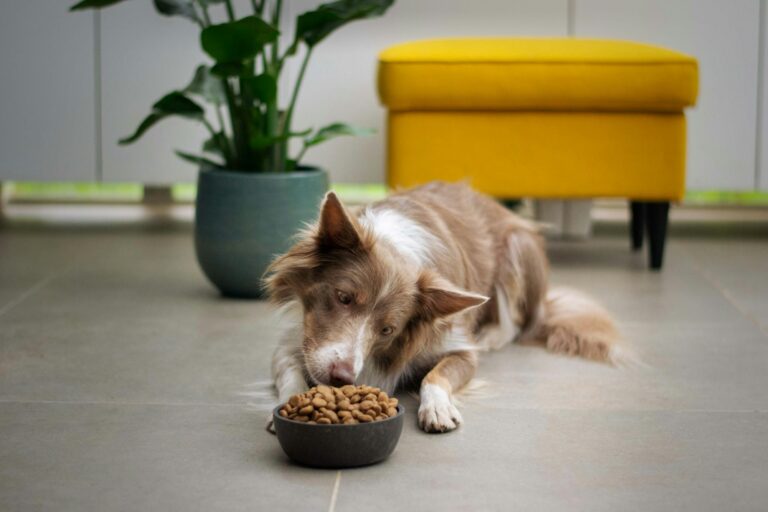
When the barking is at your dinner table
Feeding your puppy does not automatically stop interest in your meal. The sights, movement, and previous scraps can still draw them over.
Choose one household rule about food from the table. Ask every caregiver and visitor to follow it.
Arrange a comfortable alternative before you sit down. Supervise any chew or feeding activity and choose one appropriate for your puppy.
The goal is to make the meal manageable while the puppy learns. A family argument over who slipped them chicken does not improve the lesson.
Check the handoff when more than one person feeds
If one person thinks breakfast happened and another thinks it did not, settle that uncertainty before changing training.
Keep the feeding responsibility clear. Follow your puppy’s feeding advice rather than increasing or withholding food based only on barking.
For puppies aged 8 to 16 weeks, the First 14 Days Kit includes age-based schedules and household responsibility pages. Its handoff resources help caregivers share the same information.
What if the barking gets worse when ignored?
Recheck the cause and the setup. An escalating puppy may need a different approach, not more time being ignored.
Our guide to ignoring demand barking explains how to review that problem. It separates attention patterns from needs and distress.
Do not introduce a bark deterrent to solve a young puppy’s mealtime frustration. LoveMyPuppy’s device is outside its supplier age guidance for puppies under six months.
When barking becomes the first step toward a treat
Watch for this pattern: bark, brief pause, food, bark again. Your puppy may be learning the whole sequence rather than longer calm behavior.
Look for quiet before the first bark, and practice away from the hardest meal preparation. Do not provoke barking so you can reward the silence afterward. If timing is difficult, ask a reward-based trainer to watch the sequence.
For a puppy beyond the Kit’s 8-to-16-week range, see the existing 3-to-6-Month Puppy Plan. Its daily planning resources cover 12 to 26 weeks.
What counts as useful progress?
Notice whether preparation is easier, the puppy can remain comfortable, and caregivers respond consistently. A shorter episode is useful information, but it is not proof that every meal will now be quiet.
If barking remains intense or food-related behavior worries you, ask a qualified reward-based trainer for help. Bring a description of the setup, rather than only saying your puppy is stubborn.
If the word itself gets no response, read why your puppy ignores the quiet cue.