

A knock interrupts a quiet afternoon. Your puppy barks, the guest waits, and you are managing both. You do not need to teach a perfect greeting right now. First, make the doorway less intense.
FIRST, A PRACTICAL CHECK
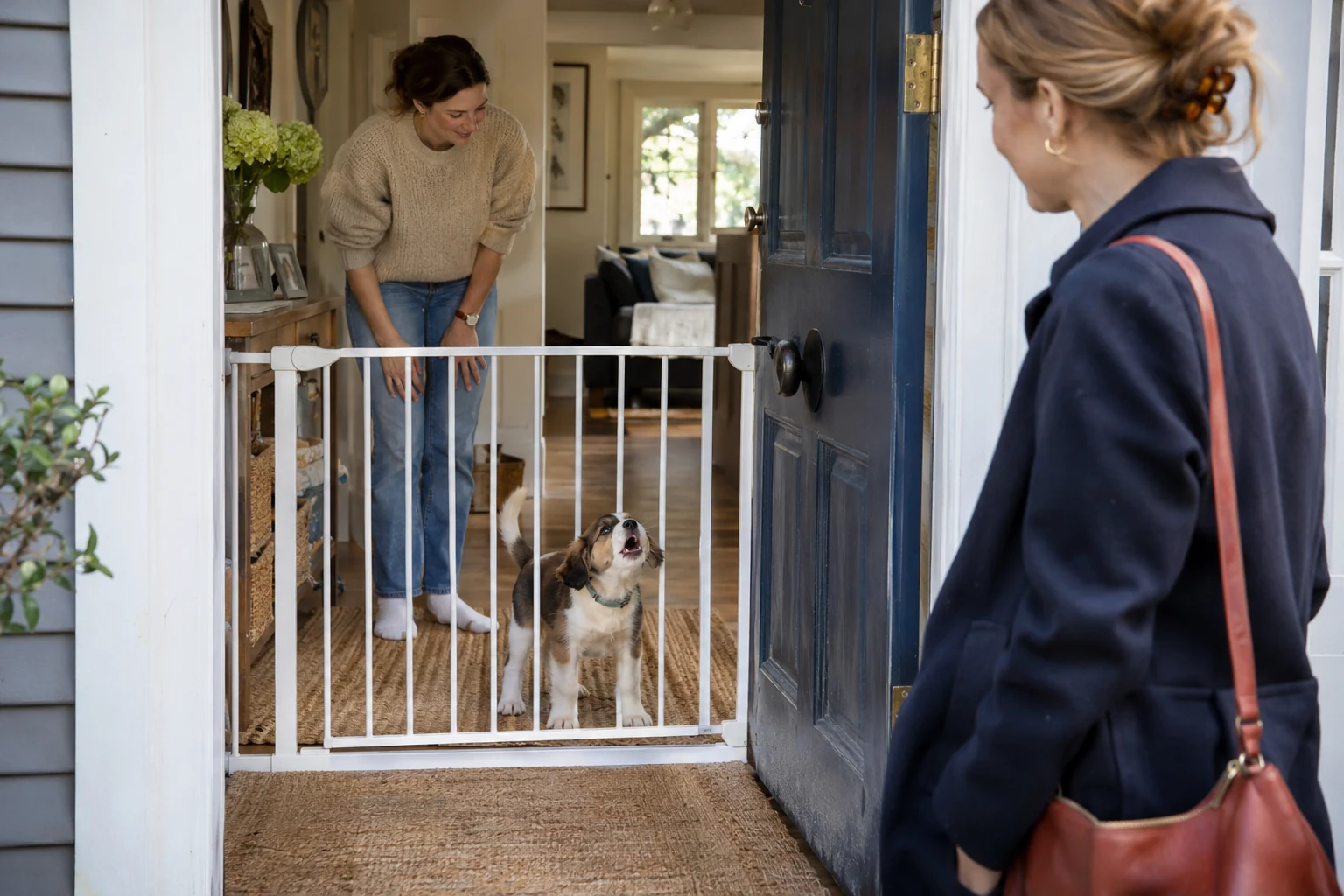
Set up the visit before the door opens
- Choose a retreatSet up a gate, pen, or quiet room before guests arrive.
- Give guests a jobAsk them to ignore the puppy at first. No reaching, calling, or leaning over.
- Let your puppy chooseKeep space and allow the puppy to approach only if they are comfortable.
Why might a puppy bark at visitors?
Arrival barking may come from excitement, uncertainty, fear, frustration, or an attempt to alert the household. The bark alone does not tell you which one. Notice your puppy’s posture and whether they can recover when the visitor pauses or moves farther away.
What should I do when someone arrives?
Use a gate, pen, or comfortable room to keep your puppy from rushing the door. A capable adult may hold the leash. Give your puppy enough distance to feel safer.
Ask visitors not to lean over, reach, stare, or crowd. If your puppy is overwhelmed, let her stay apart for the visit.
Does barking restart when your visitor stands or walks across the room? That movement may be a new challenge. Give your puppy more space and ask the visitor to pause.
She can stay behind the gate for the whole visit if that helps her feel safe.
If the visit was not planned
You can ask a delivery person or guest to wait while you move your puppy somewhere safe. You do not owe anyone a doorstep introduction.
If a child visits, supervise closely. Keep the gate or quiet room a no-entry space. A puppy who freezes or hides needs more room, even when barking stops.
The harder moment may come later. A guest stands, crosses the room, or reaches for a bag. Ask guests to move calmly and leave your puppy alone if she retreats.
If she stays tense, end the interaction. A quiet visit without a greeting beats a forced greeting that frightens her.
How can I practice between visits?
For practice suggestions, see Dogs Trust’s visitor guide and VCA’s greeting-behavior guidance. Both support practicing a calmer response before a real guest is waiting at the door.
Notice which part of an arrival changes your puppy. Is it the buzzer, footsteps, the opening door, or movement inside? These are different moments.
Practice an easier version when nobody is waiting. A qualified reward-based professional can guide you. If she barks and backs away, give her space again.
A puppy may take a treat and still feel uneasy. Do not use food to pull her toward someone she avoids. Watch whether she can leave, settle, and choose to interact.
Keeping her distance is useful information, not a failed greeting. If fear grows or she snaps, stop introductions and ask your veterinarian for support.
- Start with the quiet version. Teach your puppy to settle on a mat or behind a gate when nobody is arriving. Reward relaxed pauses.
- Add a small door sound. Have a helper make a soft knock while your puppy stays at a comfortable distance. Pause or make it easier if your puppy barks or rushes.
- Build toward a short visit. Keep the puppy behind a gate or at a distance where they can stay settled. Let them choose whether to approach, and end the practice if they look worried.
Should the visitor give my puppy a treat?
Not automatically. If your puppy is worried, having a stranger approach or offer food can add pressure. Keep the puppy at a comfortable distance and let them choose whether to approach. Follow guidance from your veterinarian or a qualified reward-based behavior professional if fear is significant.
When should I get help?
Ask your veterinarian or a qualified behavior professional if your puppy growls, lunges, cannot settle, or seems frightened. Seek help if the reaction intensifies.
Apartment noise rules can add pressure. Manage the doorway and avoid repeated stressful arrivals while you seek support.
Visitor barking is different from barking at dogs on walks, distress in the crate, or barking when left alone. The setting matters, so describe the exact situation rather than treating all barking as one problem. If the barking happens when another dog passes on a walk, see our guide to barking at other dogs.
Frequently asked questions
Should visitors pet a puppy who is barking?
Ask visitors to pause and give the puppy space. Reaching, coaxing, or insisting on a greeting can add pressure. Let the puppy move away or stay behind a barrier.
Why does my puppy bark and then move closer?
Approaching and barking do not identify a single emotion. Watch the whole body and situation, and do not use proximity as proof that the puppy wants contact.
What should I do if my puppy growls or snaps at a guest?
Separate people and puppy safely without forcing contact. Arrange help from your veterinarian or a qualified behavior professional before the next close interaction.
Sources and further reading
General information only. This is not a diagnosis or substitute for veterinary or qualified behavior support.