

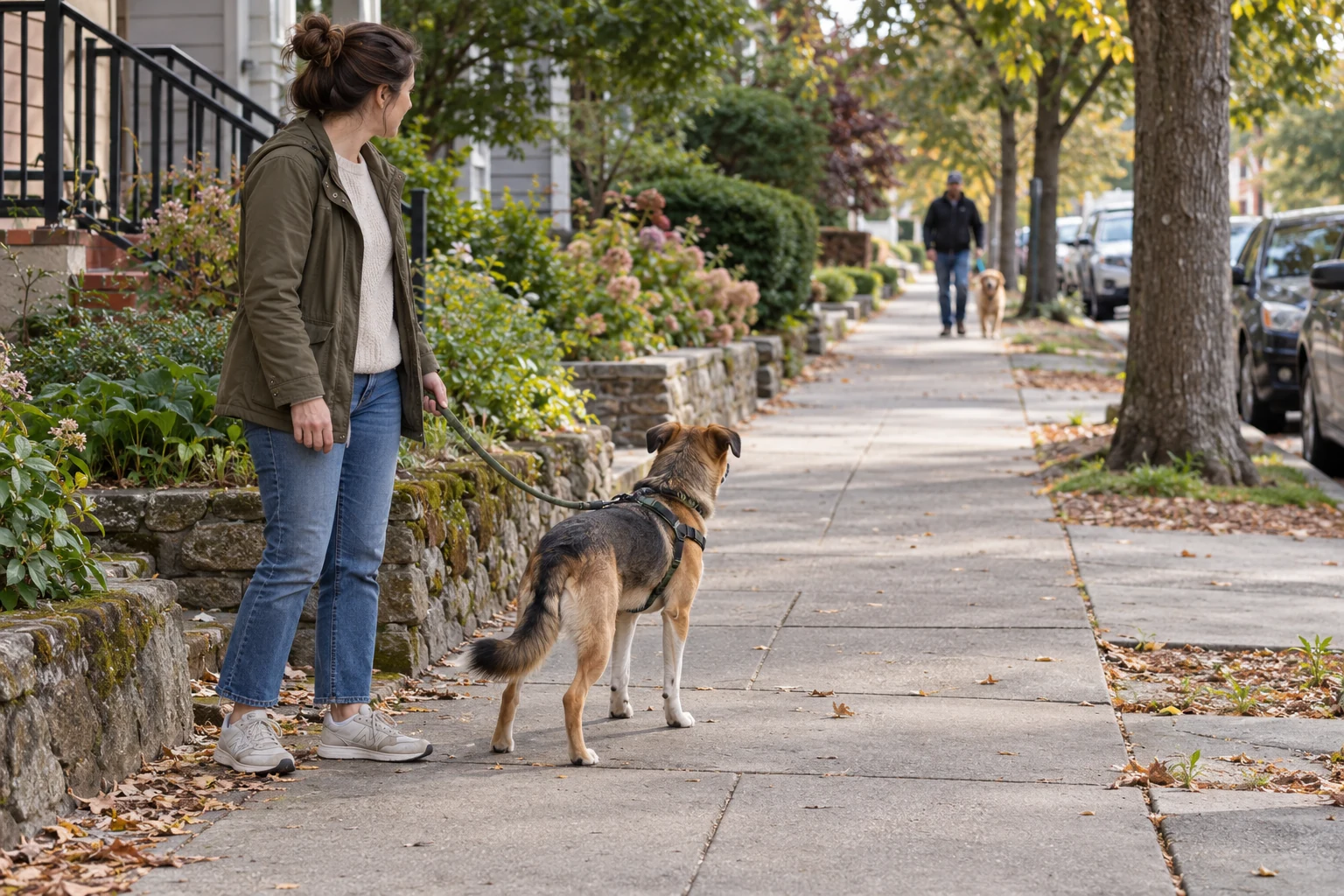
Your dog spots another dog. The leash tightens, the barking starts, and you can feel the other person watching. It is hard to think clearly while trying to keep both dogs safe.
FIRST, A PRACTICAL CHECK
When another dog appears
- Make roomTurn away or cross before your dog is overwhelmed. A greeting is optional.
- Notice the bodyWatch whether your dog can look back, sniff, or pause. Do not test them.
- End safelyKeep the leash secure and leave if either dog is distressed.
Why does my dog bark at other dogs?
Some dogs are frustrated because the leash prevents them from reaching the other dog. Some are worried and bark to make the other dog move away. A dog can also want to approach and feel unsure at the same time. If the behavior is new, ask your veterinarian to check for pain or discomfort. Woodgreen’s guide to barking around other dogs also explains why distance and context matter during close passes.
What should I do in the moment?
Give the dogs room. If you can, calmly turn away, cross the street, or move behind a visual barrier. Skip close greetings while your dog is already struggling. Keep your hands steady and avoid leash jerks, shouting, or tools meant to startle. Those may add stress without explaining what caused the reaction.
If the sidewalk is too narrow for a comfortable pass, turn back or step into a safe open space before the other dog reaches you. A parked car can briefly block the view if you can get there without entering traffic. You do not have to finish the route to make the walk worthwhile.
When another dog appears with no room to pass
If an off-leash dog heads toward you, look for a safe exit instead of testing whether the dogs will get along. Ask the other person to call their dog back. Do not reach between dogs or step into traffic to make space. A route that keeps trapping you between fences and oncoming dogs may need a quieter time or a different path for now.
It is okay to turn around. That choice protects both dogs and gives you a chance to notice what happened before the bark. You can work on the bigger pattern when nobody is approaching you on a narrow sidewalk.
What can I learn from the next few walks?
Notice what was happening just before the bark: how close the other dog was, whether the path was narrow, whether your dog had room to move, and what your dog’s body was doing. Keep the note factual. “A dog appeared around the corner; my dog barked and pulled for about 20 seconds” is more useful than “my dog was being bad.”
The useful distance is not a fixed number of feet. On an open path, your dog may glance at another dog and keep sniffing. On a tight path, they may freeze, stare, or pull before the first bark. That earlier change is information. If you can move away while your dog can still respond to you, do that instead of waiting for the barking to prove the moment is too hard.
A dog who plays well off leash can still struggle on a leashed walk. Surprise encounters and limited room to leave change the situation. Describe the exact pattern to your veterinarian or a qualified trainer instead of deciding your dog is either “friendly” or “aggressive” from one setting. A calmer pass at a comfortable distance is real progress, even if a close greeting is still off the table.
How can I practice on easier walks?
Start where your dog can notice another dog and still look back at you, sniff, or take a treat. Reward that moment, then give your dog room to leave. If your dog stiffens, barks, or will not take food, the setup is too close or too difficult. Move farther away instead of pushing through it.
Keep practice short and choose a quiet route when you can. Do not use a treat to lure your dog into a greeting they are not ready for. If you are worried about lunging or safety, work with a qualified reward-based professional on a plan for your dog.
When should I ask for help?
Talk with your veterinarian if the barking is new, suddenly worse, or comes with signs of pain or illness. If walks feel unsafe, your dog is lunging or snapping, or you cannot find a distance where your dog can settle, ask your vet for a referral to a qualified, reward-based behavior professional. Avoid anyone promising an instant fix or recommending punishment for fear-based behavior.
Will my dog eventually stop barking at every dog?
Progress varies. Some dogs become more comfortable with thoughtful management and professional support; others may always need more distance or careful setups. The goal is a safer, less stressful walk, not a promise that your dog will never bark.
Frequently asked questions
Does barking at another dog mean my dog is aggressive?
Barking alone cannot tell you why your dog is reacting. Fear, frustration, excitement, and other causes can look different in context. Keep everyone safe and ask your veterinarian or a qualified behavior professional if you are unsure.
Should I let the dogs meet so they get used to each other?
No greeting is required. Do not force an interaction or test your dog at close range. Create distance and ask a qualified professional for an individual plan if walks are hard to manage.
What if my dog cannot calm down once they see another dog?
Move farther away and end the encounter safely. If your dog is difficult to control or anyone may be at risk, avoid close passes and get individualized help.
Sources and further reading
General information only. This is not a diagnosis or substitute for veterinary or qualified behavior support.