
Puppy life · 4 minute read
The 4-month puppy dip nobody warns you about
 By Dr. Michael Northcutt, PhD · Certified Companion Animal Rehabilitation Therapist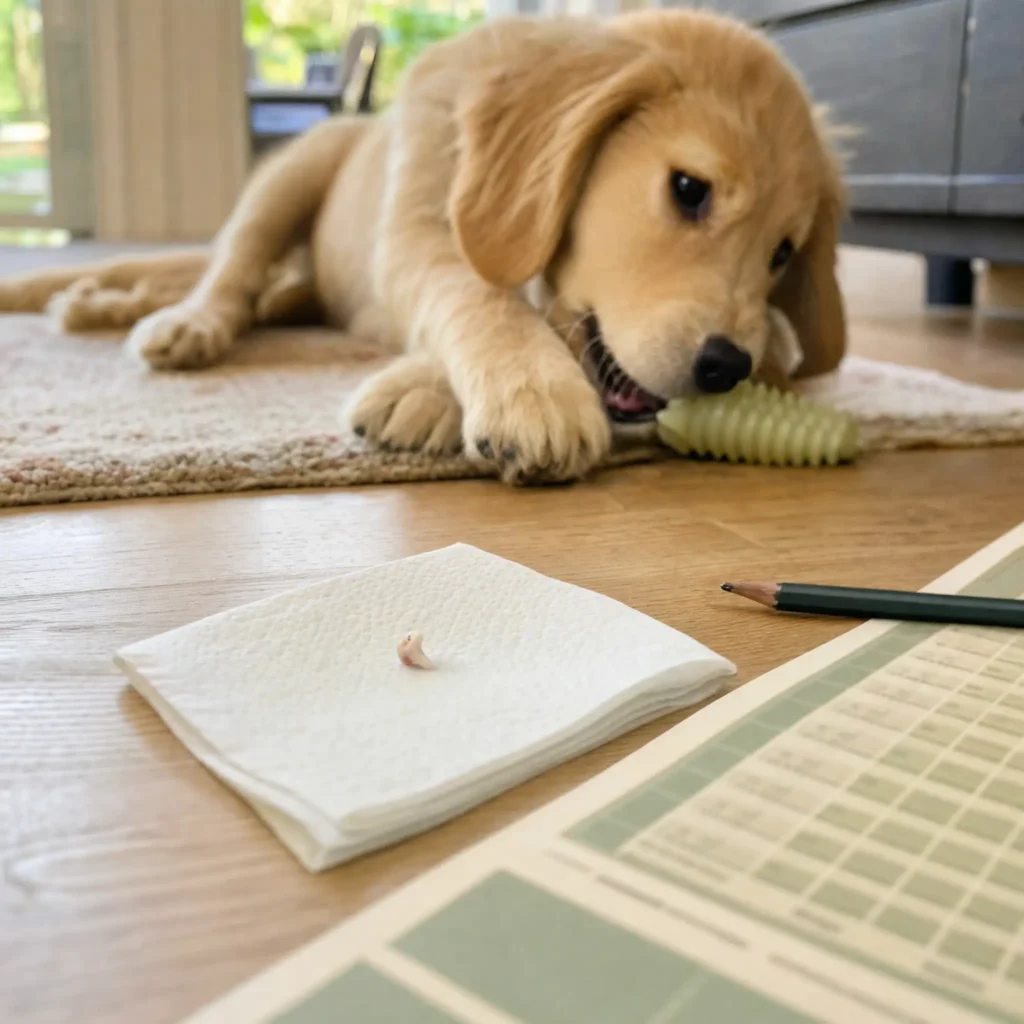
Our pup had gone almost two weeks without an accident. I was bragging about it. Then, at four months old, she peed on the rug right in front of me. She looked at me like she’d never heard of outside.
The next day, another one. Then she started waking up at night again.
I was crushed. I honestly thought we’d broken something.
I went online, and it turns out a lot of people say the same thing around this age. Their puppy was doing great, and then suddenly, it was like she forgot everything. She’s growing fast. She’s teething. Her world is getting bigger. Things get a little bumpy.
So we did the least exciting thing possible. We went back to basics.
I pulled out our old fridge schedule, the one from the first weeks, and put it back up. More trips outside, after waking, eating, and playing. Treats for going in the right spot. Closer watching. Her pen when I couldn’t watch. And I cleaned the accident spots really well so the smell wouldn’t pull her back.
I also started the potty log again. That’s what showed me something I’d missed. Most of the new accidents happened in the late afternoon. That’s right when the kids next door got home and she got all wound up. So we added a trip right before then.
Within a while, things settled back down. Not perfect, but back on track.
I also called our vet to rule out anything medical. Sometimes a sudden change like that can be. If your puppy suddenly has lots of accidents, that’s a vet call first. Same if she seems to be straining or drinking way more water than usual.
The biggest lesson? Training isn’t a straight line. It goes up, and down a little, and up again. When it dips, don’t panic. Go back to what worked, write it down, and give it some time.
Why months 3 to 6 feel so much harder
The first two weeks are about settling in. Then a lot happens at once, and most of it lands on the same few months.
The shots keep coming. Puppy shots often finish at or after 16 weeks, according to VCA Animal Hospitals. That’s a lot of dates to keep straight.
The teeth start falling out. VCA says teething can start at about 3.5 to 4 months. Blood on a toy and a tiny tooth on the rug are usually normal.
The evenings get bitey. Owners often report the worst biting in the evening, when puppies are overtired.
The clock is ticking on socializing. The veterinary behavior society AVSAB says the first three months matter most.
None of that means you’re doing it wrong. It means your house needs a plan for this stretch. Same as it needed one for the first two weeks.
So we put the whole stretch on paper
That’s why we made The 3 to 6 Month Puppy Plan. It maps out every week from 12 to 26. Everyone in your house can see what to do next, and what can wait.



There’s also a page called Wobbly weeks and when to call. It covers dips like ours, and when a dip is a vet call instead.
The 3 to 6 Month Puppy Plan
$37 one time, instant download
- 19 fillable pages, marked week by week from 12 to 26
- Vet and vaccine tracker, teething guide and mouth check
- The evening land shark plan and alone-time steps
- Daily schedules for 4, 5 and 6 months
- 4 free bonuses: Socialization Bingo Card, Puppy Class Picker, Teething Safe-Chew Card and Work-Week Alone-Time Planner
45-day money-back guarantee. Not helpful? Email us for a full refund.
Is it right for your puppy?
Yes, if your puppy is about 3 to 6 months old, or close to it. Yes, if more than one person handles the puppy, or a full workday is coming.
Not yet, if your puppy came home in the last two weeks. Start with the First 14 Days Kit instead. And for any health problem, call your vet.
P.S. The dip is normal, and it passes faster when the whole house handles it the same way. See what’s inside the plan.
Sources: VCA Animal Hospitals (vaccines for dogs, puppy teething); AVSAB Position Statement on Puppy Socialization. Michael’s story is his own experience, not a customer review. General information for organizing your household, not veterinary advice.